


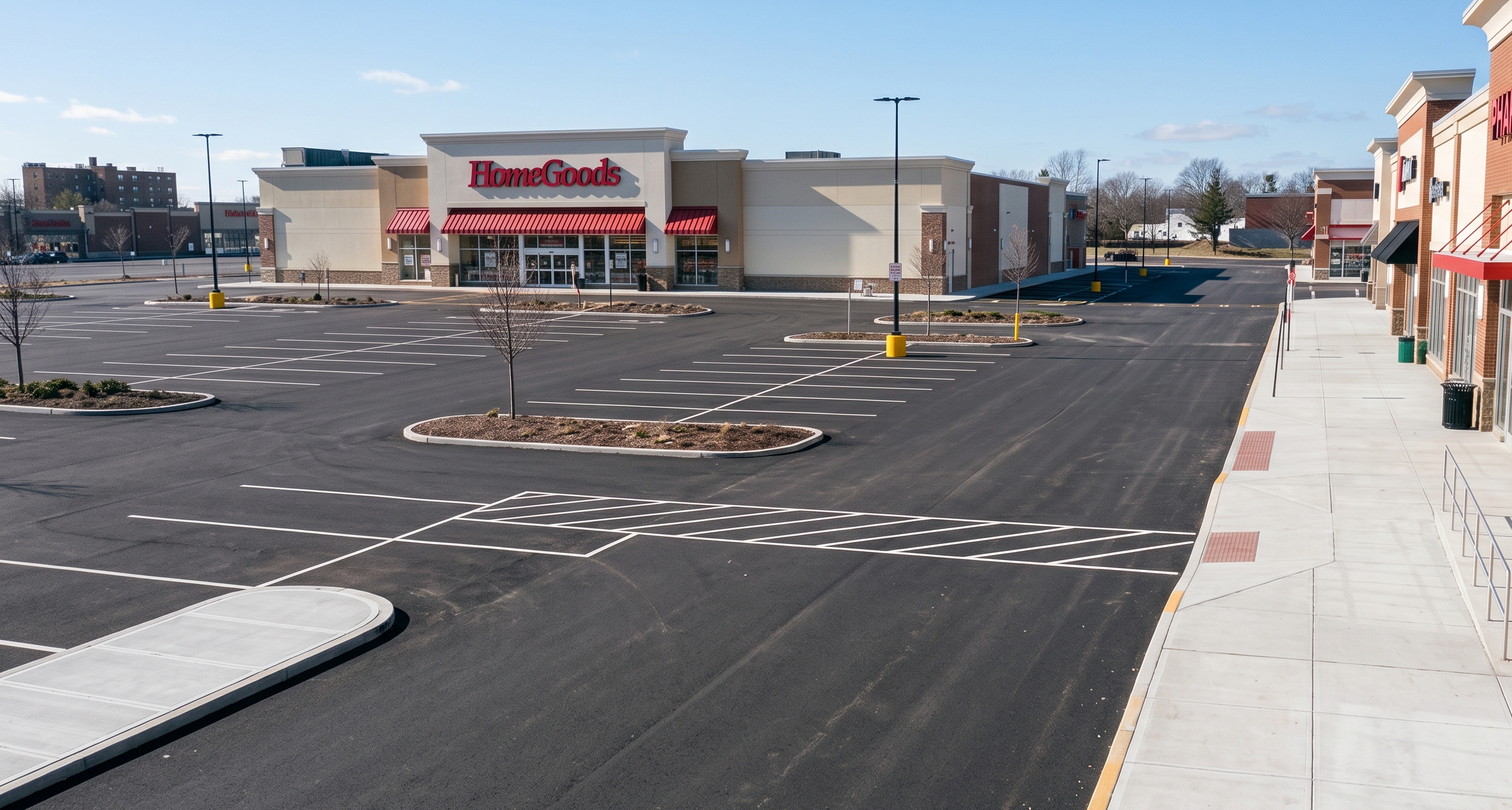
When winter storms hit, a commercial property cannot afford to grind to a halt. Blinding flurries, black ice, and heavy drifts present severe operational risks, multi-million-dollar liability exposures, and immediate accessibility issues. For property owners and facility managers, surviving the winter requires moving past a reactive, “call-when-it-snows” mindset. True operational resilience depends on deploying sophisticated commercial snow plowing and de-icing strategies well before the first snowflake touches the pavement.
Maintaining clear walkways, open parking lots, and safe shipping docks is a balancing act of logistics, chemistry, and real-time data. This guide breaks down advanced winter property management tactics to keep your site safe, compliant, and fully operational throughout the freezing months.
Frequently Asked Questions
Q: When should a commercial facility begin planning its winter snow strategy?
A: Planning should begin in August or September. Securing contracts, mapping sites, and ordering bulk chemical supplies late in the season often results in higher costs and limited equipment availability.
Q: What is the main cause of slip-and-fall liabilities on commercial properties?
A: Most incidents occur from black ice or unaddressed freeze-thaw cycles on walkways, rather than during the actual snowstorm itself. Continuous monitoring is vital.
Understanding the Mechanics of Modern Winter Management
In winter management, this context means treating a snow event as a dynamic ecosystem. It is not just about a truck moving snow from point A to point B. It involves looking at how falling temperatures interact with pavement materials, how moisture levels alter the weight of the snow, and how specific chemical compounds behave under varying atmospheric pressures.
[Snow Event Ecosystem]
├── Atmospheric Conditions (Moisture, Temp, Wind)
├── Pavement Dynamics (Material, Thermal Retention)
├── Mechanical Action (Plowing, Pushing, Stacking)
└── Chemical Application (Pre-treating, Anti-icing, De-icing)
When you view winter operations through a unified, systemic lens, you move away from generic solutions. Instead, you can design an agile strategy where mechanical clearing and chemical applications work in perfect harmony.
Frequently Asked Questions
Q: Why does the difference between ambient air temperature and pavement temperature matter?
A: Air temperature changes quickly, but pavement holds thermal energy longer. Pavement temperature dictates whether snow will melt on impact or instantly freeze into ice, which determines when chemicals must be applied.
Q: What is the difference between anti-icing and de-icing?
A: Anti-icing is a proactive liquid application applied before a storm to prevent ice from bonding to the ground. De-icing is a reactive application applied after snow has accumulated to break down existing ice bonds.
Matching Strategy to Property Intent and Usage
Every commercial footprint has a unique operational DNA. A regional fulfilment hub that operates 24/7 requires an entirely different winter management approach than an upscale corporate office park or a fast-casual retail strip. Aligning your snow response strategy with the precise intent and traffic patterns of your property prevents costly bottlenecks and ensures maximum safety where it matters most.
- High-Volume Logistics & Industrial Hubs: For distribution facilities, keeping shipping lanes and loading docks open is critical. Even a two-hour delay can disrupt an entire supply chain. The priority here is continuous, zero-tolerance plowing combined with heavy-duty anti-icing along heavy truck lanes to prevent hard packing.
- Retail and Commercial Spaces: In retail environments, the focus shifts to customer foot traffic and consumer safety. Pedestrian walkways, ADA ramps, and main parking rows take precedence. Hand-shovelling crews and precise liquid application on sidewalks are essential to eliminate slip-and-trip hazards.
- Corporate Parks and Healthcare Facilities: Hospitals and emergency centers require absolute, around-the-clock accessibility. Strategies here demand dedicated, on-site equipment and continuous scraping to ensure that emergency vehicles and employees can enter and exit without hesitation.
Frequently Asked Questions
Q: How do you determine the “trigger depth” for snow plowing at a retail property?
A: Retail spaces typically have a strict 1-inch or 2-inch trigger depth. Plowing begins as soon as accumulation hits this threshold to ensure customers can park and walk safely.
Q: Why do industrial logistics hubs require zero-tolerance snow removal?
A: Heavy semi-truck traffic rapidly packs unplowed snow into dense, slick sheets of ice. Once packed down by heavy weights, this ice becomes incredibly difficult to clear mechanically or chemically.
Industry Standards and Risk Management in Winter Operations
In the commercial property management industry, execution relies heavily on rigorous preparation, certified personnel, and a deep understanding of environmental liabilities. You cannot manage a blizzard through guesswork. Mitigating winter risks requires a structured, multi-layered approach to site logistics and documentation.
1. Pre-Season Site Mapping and Logistics
Expert execution begins in the late summer and early autumn. A comprehensive site inspection is conducted to map out the property’s unique features. Crews document the location of fire hydrants, utility drains, speed bumps, and delicate landscaping elements. Dedicated snow storage zones are designated ahead of time, ensuring that large snow banks do not block line-of-sight at critical intersections or melt across parking spaces, which can create dangerous freeze-thaw cycles.
2. Advanced Weather Telemetry and Monitoring
Relying on standard local news broadcasts is a recipe for failure. Professional operations leverage advanced meteorological services that provide hyper-local, radar-verified updates. Monitoring pavement temperatures—which often differ significantly from ambient air temperatures—allows managers to predict exactly when moisture will bond to the asphalt, triggering precise crew dispatches.
3. Safety and Liability Mitigation
Slip-and-fall lawsuits represent a massive financial vulnerability for commercial properties. Trustworthy snow partnerships prioritize meticulous documentation. Every plow run, salt application rate, and pavement temperature check must be logged with time-stamped GPS data. This meticulous record-keeping acts as a critical shield against frivolous liability claims.
Frequently Asked Questions
Q: Why is GPS tracking important for a commercial snow contractor?
A: GPS tracking provides indisputable, time-stamped proof of when a property was ploughed or salted. If a slip-and-fall claim occurs, these records serve as primary defence evidence in court.
Q: What are the dangers of poor snow pile placement on a commercial site?
A: Placing piles uphill or near drains causes water to stream across high-traffic walking paths as it melts during the day, which then refreezes into invisible black ice at night.
Mechanical Excellence: Precision Plowing Tactics
Effective commercial snow plowing is an art of efficiency and timing. Simply pushing snow around leads to wasted fuel, damaged infrastructure, and unsafe conditions.
[Plowing & De-icing Workflow]
├── Phase 1: Pre-Treating (Liquid Anti-Icing before storm)
├── Phase 2: Mechanical Clearing (Plowing & Shoveling during storm)
└── Phase 3: Post-Storm Management (De-icing & Freeze-Thaw Monitoring)
- The Power of Anti-Icing: The most effective plowing strategy begins before the storm arrives. Applying a liquid brine solution to dry pavement creates a barrier that prevents snow and ice from bonding to the surface. This makes mechanical plowing significantly cleaner, allowing plows to scrape down to bare pavement much more easily.
- Strategic Stacking and Hauling: Snow should always be pushed to the lowest elevations of the property and away from buildings. If snow piles are placed uphill, daytime melting will send water trickling across parking lots, where it will refreeze into treacherous patches of black ice overnight. When a property runs out of physical space, off-site snow hauling must be initiated to maintain open parking stalls.
- Equipment Optimization: Utilizing the right tool for the job prevents property damage. Heavy-duty containment plows (or snow pushers) are ideal for wide-open parking lots, while articulated skid steers navigate tight drive-thrus, and specialized poly-edge blades protect decorative stone walkways from gouging.
Frequently Asked Questions
Q: When is it necessary to choose off-site snow hauling over on-site stacking?
A: Off-site hauling is required when a property runs out of physical space without sacrificing valuable parking stalls or when large piles begin to create major line-of-sight visibility hazards.
Q: How do poly-edge blades protect commercial hardscapes?
A: Unlike standard steel blades, poly-edge blades are made of a dense polyurethane material that flexes over pavers, curbs, and stamped concrete, preventing structural gouges and cracks.
Chemical Intelligence: Advanced De-icing Strategies
Throwing standard rock salt at every winter problem is inefficient, environmentally harmful, and costly. Modern de-icing requires a data-driven understanding of chemical properties and temperature thresholds.
| Chemical Compound | Effective Lowest Temp | Primary Use Case | Environmental Impact |
| Sodium Chloride (Rock Salt) | 15°F (-9°C) | Bulk parking lot melting | High; can corrode concrete & harm vegetation |
| Calcium Chloride | -25°F (-32°C) | Extreme cold; critical walkways | Moderate; highly effective at low volumes |
| Magnesium Chloride | -5°F (-21°C) | High-traffic footpaths; pet-safe | Low; gentler on lawns and concrete surfaces |
| Liquid Brine (NaCl Blend) | 18°F (-8°C) | Pre-storm anti-icing | Lowest; uses up to 70% less salt content |
Choosing the right compound depends heavily on the current pavement temperature. For instance, if the ground drops to 10°F, traditional rock salt loses its melting effectiveness, meaning continuing to apply it wastes money and clutters the environment. Switching to a high-performance alternative like calcium chloride ensures continuous melting even in deep-freeze conditions.
Frequently Asked Questions
Q: Why does rock salt stop working when it gets extremely cold?
A: Rock salt requires moisture to dissolve and form an ice-melting brine. Below 15°F, it cannot melt the ice fast enough to create this liquid barrier, rendering it largely ineffective.
Q: Is liquid brine safer for the environment than solid rock salt?
A: Yes. Liquid brine uses significantly less total salt content to cover the exact same surface area, lowering chemical runoff into nearby soil and storm drains by up to 70%.
Local Optimization and Regional Resilience
A highly effective commercial snow plan must adapt to the unique realities of its specific region. Navigating a winter storm in a dense urban center requires a completely different approach than managing a sudden system in the transition zones or the sprawling properties of our target service areas.
Local expertise means understanding municipal codes, municipal snow dumping ordinances, and exact local slip-and-fall statutes. It also means positioning equipment hubs strategically so trucks do not get trapped in municipal gridlock when a storm hits during rush hour.
By anchoring your snow plowing and de-icing strategies in local operational realities, your business avoids municipal fines, maintains excellent community standing, and keeps its doors open safely for local customers, clients, and employees—no matter what the weather forecast brings.
Frequently Asked Questions
Q: How do municipal codes affect commercial snow staging?
A: Most cities strictly prohibit property owners from pushing snow out of private parking lots onto public streets or blocking municipal sidewalks, which can result in heavy daily fines.
Q: What is a snow transition zone?
A: These are regions that frequently fluctuate right around the 32°F freezing mark. They require constant monitoring because weather can quickly alternate between rain, sleet, wet snow, and black ice within a few hours.
Finding Trusted Commercial Snow Plowing Near Me
When facility directors search for a reliable commercial snow plowing team near me, they aren’t just looking for a truck with a plow attachment; they are hunting for a localized partner who understands regional weather patterns and neighborhood infrastructure. Local algorithms look for geographic proximity and neighborhood prominence to determine who appears in the Map Pack.
Whether your corporate assets sit in major industrial corridors or dense downtown business districts, choosing a partner with local dispatch hubs guarantees faster response times and a team that knows your specific municipal snow-clearing ordinances inside and out.
Frequently Asked Questions
Q: How do I find the best commercial snow plowing contractor near me?
A: Look for partners that showcase a dedicated local service area map, feature verified Google Business Profile reviews from companies in your immediate vicinity, and own specialized local fleet tracking software.
Q: Does proximity affect response times during an emergency zero-tolerance snow event?
A: Absolutely. Choosing a contractor with localized salt depots and staging locations near your property guarantees they will hit your site before roads freeze over, regardless of city traffic.
Secure Your Commercial Property for the Winter
Don’t wait for a major blizzard to expose the gaps in your winter preparation. Partnering with a dedicated, professional team ensures your site stays safe and fully operational all season long. Contact 10xlandscaping.com/ today to schedule a comprehensive pre-season site evaluation and build a custom winter management plan tailored to your property’s needs.