


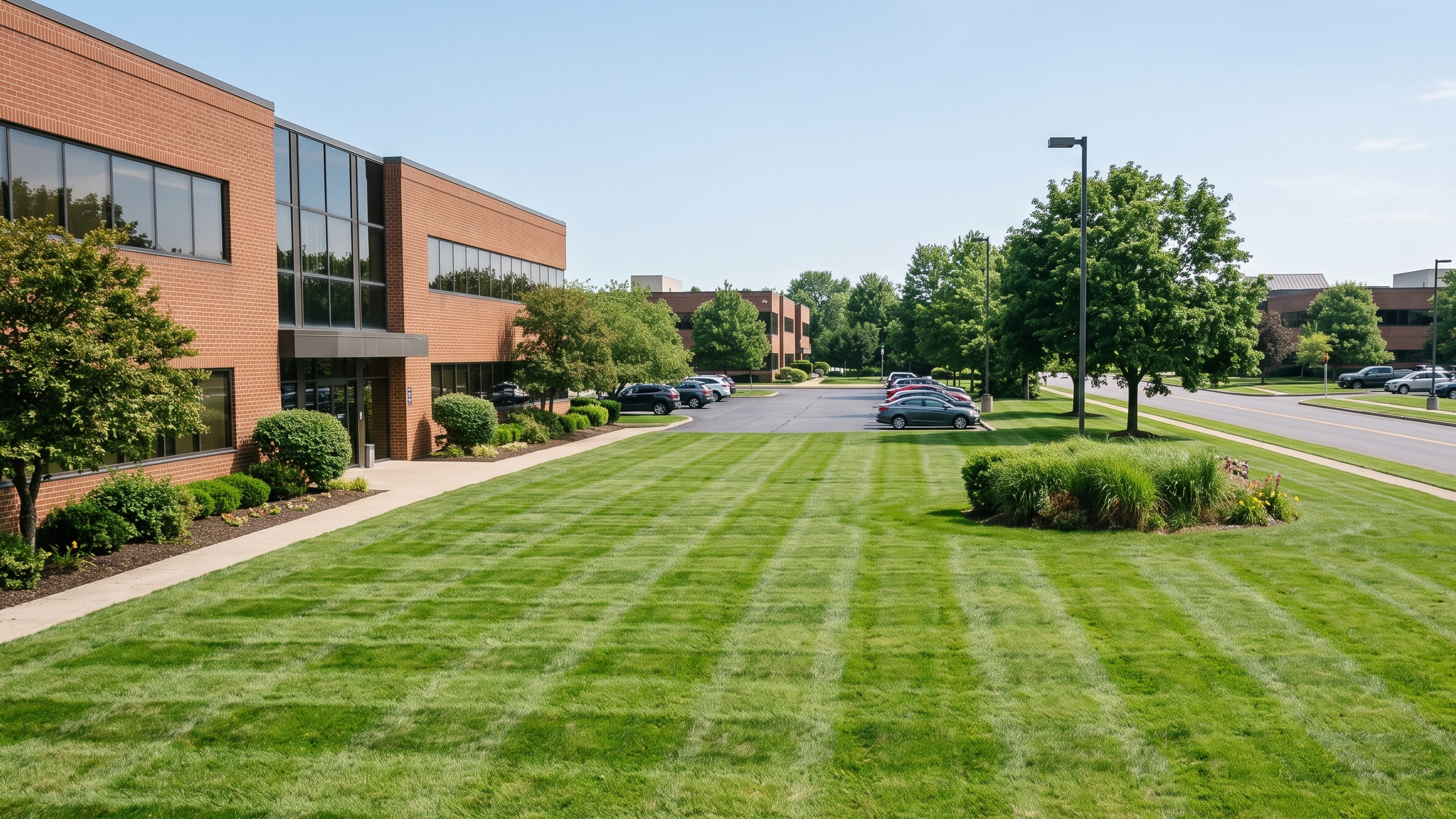
Managing commercial real estate, corporate office parks, retail plazas, or HOA communities across Western New York comes with a distinct set of operational challenges. When spring arrives, commercial property managers sign landscape maintenance agreements with the expectation that their grounds will stay pristine, safe, and welcoming throughout the summer. Yet by July and August, many Buffalo property managers find themselves doing something they hoped to avoid: terminating their existing grounds care contract and switching commercial landscapers mid-season.
Firing a contractor in the middle of a peak growth cycle is rarely an impulsive choice. It is usually the result of weeks of missed cuts, unresponsive account managers, deteriorating turf, and compounding tenant complaints. In a region where the warm season is brief and curb appeal directly influences lease renewals and foot traffic, letting property standards slide is not an option.
1. The “Mow-and-Go” Mentality vs. Full-Scope Grounds Management
One of the most common catalysts for a mid-season vendor switch is the realization that a contractor bid on a full-service commercial maintenance contract but is executing like a residential lawn service.
In commercial grounds maintenance, mowing and string-trimming represent only the baseline. When a provider neglects the broader scope of work, properties quickly show signs of distress:
- Neglected Flower Beds and Weed Overgrowth: Broadleaf weeds, dandelions, and crabgrass rapidly invade tree rings, mulch beds, and sidewalk expansion joints if pre-emergent and routine hand-weeding are skipped.
- Overgrown Hedges and Obstructed Sightlines: Shrubs left unpruned block commercial tenant signage, obscure security cameras, and create blind spots at driveway entrances.
- Hardscape Neglect: Grass clippings left on pedestrian walkways, parking stalls, and storm drains create slip hazards and give properties an unkempt appearance.
When a property manager spends their afternoon auditing flower beds and emailing photo evidence of missed tasks to a contractor, the partnership is already failing. Commercial clients pay for proactive oversight, not a team they have to micro-manage.
Frequently Asked Questions
Q: How does a commercial grounds management contract differ from a standard lawn mowing service?
A: Standard lawn services typically focus only on routine turf cutting and perimeter trimming. Comprehensive commercial grounds management includes integrated turf health, seasonal weed control, ornamental shrub and tree pruning, mulching, bed edging, hardscape clearing, and proactive hazard inspections tailored to high-traffic commercial spaces.
Q: Can a commercial landscaper be terminated for skipping non-mowing tasks like weeding or pruning?
A: Yes. If non-mowing tasks such as bed maintenance, shrub trimming, and litter clearing are clearly detailed in the Scope of Work (SOW) of your service agreement, persistent failure to perform these tasks constitutes a breach of contract, which usually justifies termination after a standard cure-notice period.
2. Communication Breakdowns and Unanswered Service Tickets
Operational transparency separates dependable commercial grounds specialists from unreliable vendors. In the fast-paced Buffalo commercial property market, building managers handle dozens of tenant requests daily. When landscape issues arise, waiting three to five business days for an account manager to reply is unacceptable.
Property managers routinely switch providers mid-season due to common communication breakdowns:
- Unreturned Calls and Emails: Voicemails disappear into a void, and routine service inquiries receive no acknowledgment.
- Lack of Route Consistency: Crews show up on random days at erratic hours, sometimes interfering with high-traffic retail hours or tenant deliveries without prior notice.
- Zero Accountability on Service Deficiencies: When property damage occurs—such as mower decks scraping light poles, line trimmers damaging young maple trees, or irrigation heads sheared off—the vendor fails to report or repair the issue.
A dedicated commercial landscape partner provides clear schedules, dedicated account managers, and documented site inspections so property owners always know what work was completed.
Frequently Asked Questions
Q: What is an acceptable response time for a commercial landscape account manager?
A: For routine maintenance requests, a professional commercial provider should acknowledge inquiries within 2 to 4 business hours and offer a clear resolution plan within 24 hours. Emergency situations involving fallen limbs or blocked access require same-day response.
Q: Who is responsible when a commercial landscape crew damages property fixtures or irrigation heads?
A: Reputable commercial landscape contractors carry comprehensive general liability insurance. They should document accidental damage during service visits, notify the property manager proactively, and either repair the damaged components directly or reimburse the property owner.
3. Western New York Climate Challenges and Mismanaged Turf Care
Western New York has a unique growing environment shaped by Lake Erie and Lake Ontario moisture, sudden temperature swings, and heavy clay soils common in areas like Amherst, Cheektowaga, and Clarence. Managing turf in this climate requires agronomic knowledge, not just sharp mower blades.
Many non-specialized crews make critical turf management mistakes during peak summer months:
- Scalping Turf in Hot Weather: Cutting cool-season grasses (Kentucky Bluegrass, Perennial Ryegrass, and Fine Fescue) too short during July heatwaves shocks root systems, causing large sections of lawn to turn brown and invite weed infestations.
- Poor Irrigation Management: Over-watering or under-watering leads to turf stress, fungus issues like Dollar Spot or Brown Patch, and muddy low spots that collect standing water near walkways.
- Ignoring Drainage and Runoff Issues: Summer storms can overwhelm poorly graded detention basins and parking lot swales, creating liability hazards if standing water is not addressed.
When a contractor lacks the horticultural expertise to diagnose lawn diseases, adjust mowing heights dynamically, and care for ornamental plantings, the landscape’s health deteriorates rapidly under summer heat.
Frequently Asked Questions
Q: What is the ideal cutting height for Western New York commercial turf during mid-summer?
A: During July and August heat in Western New York, cool-season turfgrass should be maintained at a height of 3.5 to 4 inches. Taller grass blades shade soil beds, reduce water evaporation, promote deeper root systems, and suppress weed germination.
Q: Why does commercial turf develop brown patches during Buffalo summers despite regular watering?
A: Brown areas in hot, humid weather are frequently caused by turf diseases (such as Brown Patch or Dollar Spot fungus) exacerbated by improper watering schedules (like evening irrigation) or compacted clay soils, rather than simple drought stress.
4. Tenant Complaints, HOA Board Friction, and Brand Image Risks
For commercial property managers, a well-manicured exterior is a vital business asset. For retail centers, pristine landscaping attracts shoppers. For medical facilities and office buildings, clean grounds project professionalism and hygiene. For HOA and condo boards, curb appeal directly impacts property values.
The ripple effect of landscape failure follows a clear downward progression:
- An underperforming landscaper neglects basic upkeep and regular service schedules.
- The physical grounds deteriorate with visible weeds, uncut turf, and unkempt flower beds.
- Tenants, shoppers, and residents submit formal grievances regarding poor maintenance.
- Property managers face friction with building owners and HOA boards and risk long-term lease cancellations.
When board members demand answers during monthly meetings or anchor tenants cite property neglect during lease negotiations, property managers have no choice but to make an immediate vendor switch.
Frequently Asked Questions
Q: How quickly does exterior landscape neglect impact retail and office tenant satisfaction?
A: The impact is immediate. Overgrown entrances, unsightly weeds along walkways, and unkempt landscaping send negative signals to visiting clients and customers, leading commercial tenants to escalate grievances to property management within days of missed maintenance cycles.
Q: How can property managers address HOA board concerns when firing a mid-season vendor?
A: Provide the board with a documented maintenance log displaying contract deficiencies, photographic evidence of missed tasks, and a clear comparison showing that the replacement vendor provides an equal or superior scope of work without budget overruns.
5. Safety, ADA Compliance, and Commercial Liability Concerns
Beyond visual aesthetics, landscaping directly impacts commercial site safety. A negligent grounds crew introduces serious legal liabilities:
- Blocked Sidewalks and Walkways: Overhanging branches, uncollected storm debris, and uneven turf edges create tripping hazards for employees and visitors.
- ADA Accessibility Obstructions: Uncut brush or mulch washouts spilling onto wheelchair ramps and handicap parking access aisles violate ADA accessibility standards.
- Plow-Prep and Winter Risk: In Western New York, summer landscape maintenance directly sets the stage for winter snow and ice management. When a landscaper fails to maintain clean curb edges, clear catch basins, and mark sensitive turf boundaries before autumn, it signals they will not be capable of handling heavy buffalo snow removal.
Frequently Asked Questions
Q: Can overgrown landscaping create an ADA compliance violation on commercial properties?
A: Yes. Shrubs, branches, or mulch washouts that encroach upon sidewalks, accessible routes, or designated handicap parking access aisles reduce the required minimum clear width, creating ADA accessibility non-compliance and trip-and-fall hazards.
Q: Why does summer landscape maintenance performance predict winter commercial snow removal reliability?
A: Summer grounds management demonstrates a contractor’s routing discipline, crew reliability, communication speed, and equipment upkeep. A contractor that struggles with summer schedules frequently encounters severe operational breakdowns during heavy Buffalo winter lake-effect snow events.
6. How Underperforming Contractors Compare to Commercial Specialists
When evaluating whether to replace a vendor mid-season, the differences between struggling outfits and dedicated commercial grounds contractors become obvious across key operational areas:
- Communication Speed: Underperforming vendors take several days to reply or ignore calls entirely, whereas dedicated commercial specialists provide same-day responses through an assigned account manager.
- Service Scope: Struggling providers limit their work to a basic “mow and blow” approach, while professional contractors deliver comprehensive turf care, bed maintenance, seasonal pruning, and hardscape detailing.
- Equipment Reliability: Residential-grade crews often use mismatched, poorly maintained mowers that produce uneven cuts, whereas commercial specialists utilize heavy-duty, professionally calibrated equipment fleets.
- Agronomic Knowledge: Generic crews ignore local soil and turf conditions, while commercial specialists apply custom fertilization, weed management, aeration, and disease control plans built for Western New York soils.
- Dispatch Capacity: Stretched contractors suffer frequent route cancellations and delays, whereas established regional partners maintain fully staffed local crews that guarantee consistent schedule adherence.
Frequently Asked Questions
Q: How difficult is it to terminate a commercial landscaping contract mid-season?
A: Most commercial agreements contain performance default and termination clauses that require a 30-day written notice and a specified cure period. If the contractor fails to rectify the documented deficiencies within that window, the agreement can be legally terminated.
Q: How quickly can a replacement commercial landscaper take over property maintenance?
A: Established commercial landscaping providers with scalable local capacity can onboard a new property and deploy crews within 3 to 7 business days following contract authorization and an initial property walkthrough.
7. Finding a Reliable Commercial Landscaper Near You in Western New York
When searching for a dependable commercial landscaper near your facility mid-season, geographic proximity and route density make a measurable difference. Selecting a local contractor with active crews operating near your property ensures rapid turnaround on emergency service calls, predictable maintenance days, and uninterrupted seasonal transitions.
Key Service Corridors across Western New York:
- Northtowns Service Area: Amherst, Williamsville, Clarence, Tonawanda, Grand Island, and Wheatfield
- Central & Metro Buffalo: Downtown Buffalo Commercial District, Elmwood Village, North Buffalo, and Cheektowaga
- Southtowns Service Area: West Seneca, Orchard Park, Hamburg, Lancaster, and East Aurora
Partnering with a commercial grounds crew with established routes near your facilities eliminates the delays and communication gaps that cause mid-season vendor churn.
Frequently Asked Questions
Q: How do I find a commercial landscaper near me that handles emergency calls in Buffalo?
A: Look for a locally established commercial contractor with active crews operating in your specific township. Inquire about their emergency response protocol for storm damage, fallen limbs, and rapid board-level property audits before signing.
Q: Why does local crew density matter for commercial property maintenance?
A: Landscapers with dense regional routes can easily adjust cutting days around localized lake-effect rain patterns, dispatch backup equipment without delay, and provide flexible servicing around your property’s peak traffic hours.
8. How 10X Landscaping Handles Mid-Season Onboarding
At 10X Landscaping, we understand the urgency and frustration that comes with changing landscape vendors in the middle of summer. We make mid-season transitions seamless, swift, and stress-free for property managers across Buffalo, Amherst, Williamsville, West Seneca, Lancaster, and surrounding WNY communities.
Our mid-season onboarding framework restores property standards quickly:
- Comprehensive Property Audit: We perform an initial on-site walkthrough with your facility team to document existing maintenance deficiencies, priority cleanup areas, and safety hazards.
- Immediate Recovery Service: Our commercial crews deploy to tackle deferred maintenance—weeding, bed edging, deep pruning, and proper turf leveling—to restore curb appeal instantly.
- Structured Maintenance Schedule: We establish a reliable, documented route schedule tailored to your property’s peak traffic hours to eliminate tenant disruption.
- Proactive Seasonal Planning: We prepare your grounds for the transition into fall aeration, seasonal color rotations, leaf cleanup, and commercial snow removal services.
Frequently Asked Questions
Q: Will our property incur extra charges for a catch-up or initial recovery service with 10X Landscaping?
A: Depending on the level of deferred maintenance left behind by the prior vendor, an initial remediation plan is outlined and agreed upon during the property audit phase to ensure total cost transparency before work begins.
Q: Can the 10X Landscaping bundle summer grounds care with winter commercial snow and ice removal?
A: Yes. We provide year-round commercial exterior facility services, allowing property managers to consolidate summer grounds care and winter commercial snow plowing under one reliable vendor contract.
Our Buffalo Location & Service Hub
Connect with our regional dispatch office to verify service availability or arrange an on-site commercial walkthrough for your Western New York property.
Ready to Elevate Your Property’s Standards?
If your current landscaping company has gone quiet, left your grounds untidy, or failed to deliver on their contract promises, you don’t have to wait until next spring to fix the problem.
Contact the commercial maintenance team at 10X Landscaping today to schedule an on-site property evaluation and experience reliable, professional grounds care for your Buffalo-area properties.
Frequently Asked Questions
Q: How do I schedule a site audit for my commercial property in Buffalo or Western New York?
A: You can submit your property details via our online contact form at 10xlandscaping.com/ or call our local office directly to arrange an on-site assessment with an account manager.
Q: What types of commercial properties does 10X Landscaping service across Western New York?
A: We manage grounds for corporate office parks, medical facilities, industrial distribution centers, retail shopping centers, and multi-family HOA communities throughout Erie and Niagara counties.