


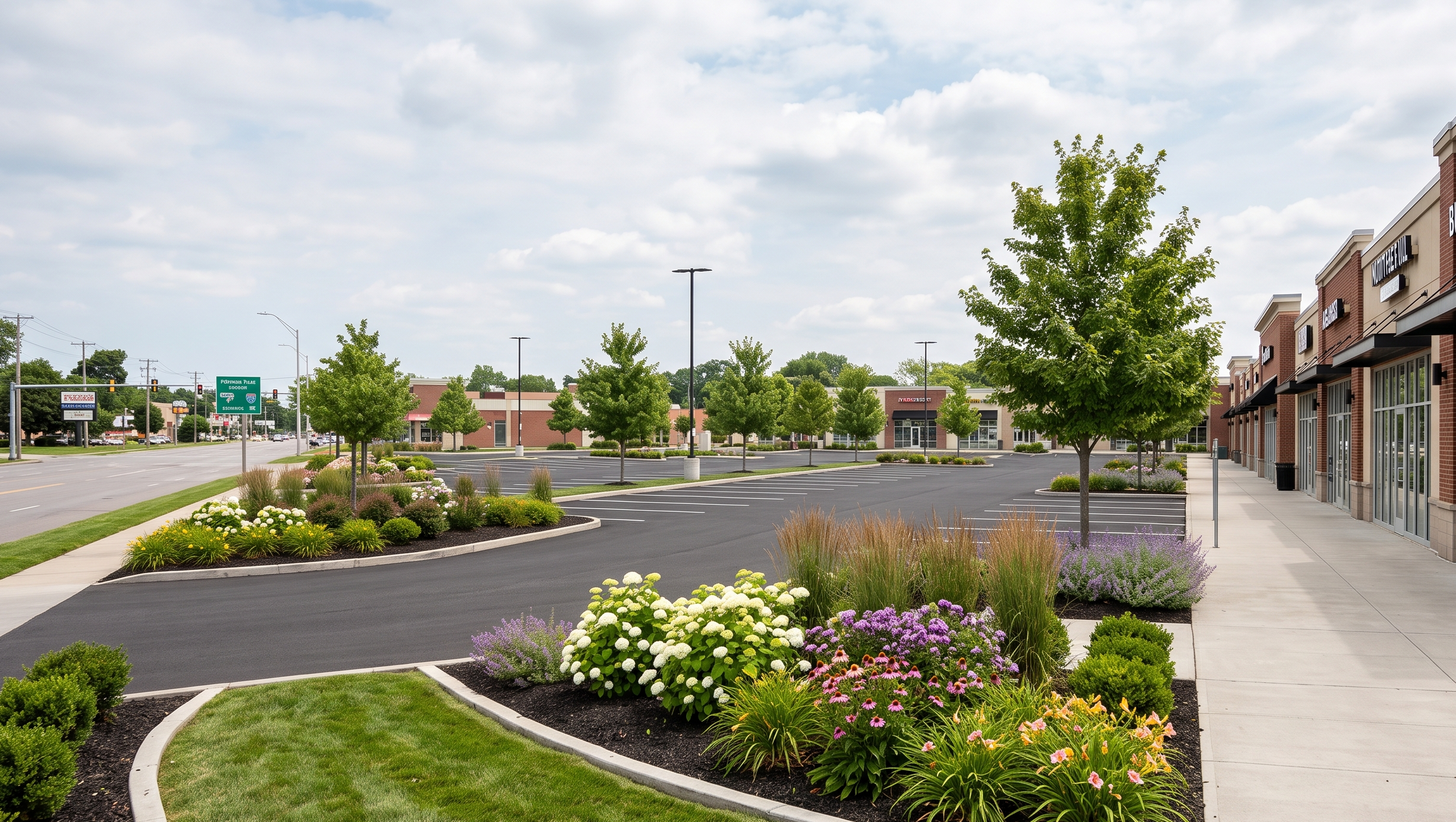
In Western New York’s competitive retail environment, first impressions directly drive store foot traffic, tenant retention, and customer trust. Managing commercial property curb appeal for Buffalo retail locations requires a strategic, year-round approach to grounds maintenance. From high-traffic shopping centers along Elmwood Avenue and Walden Avenue to boutique storefronts in North Buffalo and downtown commercial plazas, an unkempt exterior signals neglect long before a customer steps through your doors.
For retail property managers and business owners, balancing Western New York’s harsh winter freeze-thaw cycles with short, vibrant summer growth demands specialized planning. At 10x Landscaping, we deliver proactive commercial landscape management tailored specifically to the unique climate challenges and retail standards of Buffalo, NY.
Frequently Asked Questions
Q: How often should a commercial property in Buffalo schedule grounds maintenance during peak seasons?
A: During the active growing season (May through October), weekly lawn care, bed edging, and weed control are recommended. High-traffic retail centers often benefit from bi-weekly detail inspections to ensure trash cleanup and seasonal flower bed maintenance stay pristine.
Q: Does commercial curb appeal really impact retail lease values in Western New York?
A: Yes. Well-maintained properties consistently attract higher-quality national and regional anchor tenants, justify higher square-foot lease rates, and reduce tenant turn rates by maintaining steady customer foot traffic.
1. Commercial Landscaping & Business Revenue Impact
In retail commercial real estate, curb appeal is directly linked to performance metrics. Overgrown sightlines, deteriorating mulch beds, cracked walkways, and salt-damaged turf communicate poor oversight. When consumers evaluate where to spend their time and money, physical presentation acts as a primary trust signal.
Key Factors Driving Retail Foot Traffic
- Increases Dwell Time & Foot Traffic: Inviting outdoor spaces—featuring defined walkways, clean stone borders, and vibrant plantings—encourage shoppers to stay longer.
- Protects Lease Rates & Tenant Satisfaction: Prime retail tenants prefer spaces that reflect their own brand quality. High standards of exterior care attract national retailers and stable local businesses.
- Enhances Brand Visibility and Signage: Overgrown trees and untrimmed shrubs block sightlines to pylon signs and store entryways. Strategic pruning ensures clear visibility from main roadways like Niagara Falls Boulevard and Transit Road.
Frequently Asked Questions
Q: How does overgrown landscaping directly harm retail store sales?
A: Overgrown trees and high hedges obscure store signage, building entrances, and window displays from street traffic, making stores less visible and creating perceived safety hazards for evening shoppers.
Q: What quick landscaping upgrades yield the highest ROI for Buffalo shopping plazas?
A: Installing crisp bed edging with fresh dark mulch, replacing dead shrubs with colorful salt-tolerant perennials, and power-washing entry sidewalks provide the fastest visual return for minimal cost.
2. Year-Round Grounds Maintenance for Buffalo’s Four Seasons
Managing commercial property curb appeal for Buffalo retail plazas means preparing for dramatic weather transitions. The Lake Erie snowbelt brings heavy snowfall, de-icing salt exposure, and intense freeze-thaw cycles, followed by humid summers.
Winter (Dec – Mar) Spring (Apr – May) Summer (Jun – Aug) Fall (Sep – Nov)
┌────────────────────┐ ┌────────────────────┐ ┌────────────────────┐ ┌────────────────────┐
│ • Snow Plowing │ ───► │ • Salt Flushing │ ───► │ • Turf Irrigation │ ──► │ • Perennial Cutback│
│ • Ice Control │ │ • Bed Cleanups │ │ • Weekly Mowing │ │ • Leaf Clearing │
│ • De-Icer Prep │ │ • Fresh Mulch │ │ • Flower Rotations │ │ • Winterization │
└────────────────────┘ └────────────────────┘ └────────────────────┘ └────────────────────┘
Spring Recovery & Salt Remediation (April – May)
- Turf Salt Flush: Heavy road salt accumulation along parking lot perimeters damages turfgrass root systems. Spring maintenance requires deep soil flushing and applying gypsum to neutralize sodium levels.
- Debris & Litter Removal: Winter snowpiles trap trash, winter grit, and fallen branches. Thorough early-spring sweeps restore a clean perimeter before peak shopping hours.
- Mulch Installation & Bed Edging: Fresh double-shredded hardwood mulch retains moisture, deters weeds, and provides a polished dark border against turf
Summer Maintenance & Vibrant Color Rotations (June – August)
- Drought-Resistant Turf Management: Proper mowing heights (3.5 to 4 inches) protect turf roots during high-heat periods in July and August.
- High-Impact Annual Displays: Rotating seasonal annuals keeps retail entrances bright. Drought-tolerant, heat-hardy varieties such as Lantana, salvia, and Petunias thrive in commercial planters.
- Irrigation Monitoring: Smart irrigation systems with rain sensors ensure water is applied efficiently without creating slippery puddles near entrance doors.
Fall Prep & Winterizing (September – November)
- Perennial Cutbacks & Leaf Clearances: Fallen leaves on wet sidewalks present an immediate slip-and-fall hazard. Weekly autumn leaf management protects pedestrian safety.
- Late-Season Color Enhancements: Replacing summer annuals with cold-hardy ornamental kales, cabbage, and chrysanthemums keeps retail beds colorful into late November.
Winter Safety & Snow Management (December – March)
- Clear Pedestrian Pathways: Ensuring main entrances, ADA ramps, and crosswalks are ice-free guarantees uninterrupted access for shoppers.
- Protecting Plant Material: Installing burlap wraps around sensitive ornamental shrubs guards against salt spray and cold winds off Lake Erie.
Frequently Asked Questions
Q: How do you repair salt-burnt grass near commercial parking lots in spring?
A: We perform a deep water flushing to leach sodium below the root zone, apply agricultural gypsum to break up soil compaction, and core aerate before overseeding with salt-tolerant turf varieties like fine fescues or perennial ryegrass.
Q: Why is autumn leaf clearance critical for commercial retail liabilities?
A: Wet leaves on concrete or asphalt create extremely slick surfaces that lead to slip-and-fall accidents. Prompt removal prevents liability claims and stops leaves from clogging storm drains.
3. High-Return Landscape Features for Retail Shopping Centers
| Landscaping Element | Primary Function | Retail Business Benefit | Maintenance Frequency |
| Decorative Concrete Curbing | Defines plant beds, blocks grass encroachment. | Prevents mulch washout onto sidewalks; lowers maintenance costs. | Low (Inspect annually) |
| Architectural Lighting | Illuminates walkways, foliage, and store signage. | Boosts nighttime security and extends shopping hours appeal. | Bi-monthly inspection |
| Native Perennial Plantings | Provides seasonal foliage with low water demand. | Decreases irrigation costs and withstands local winter conditions. | Monthly pruning |
| High-Traffic Pavements | Directs pedestrian movement cleanly toward store entrances. | Reduces trip hazards, ensures ADA compliance. | Weekly inspection |
Avoid tall, dense shrubbery immediately adjacent to retail windows or parking lot intersections. Keeping sightlines clear between 2 feet and 7 feet improves security visibility and ensures store signage remains readable to passing traffic.
Frequently Asked Questions
Q: What lighting adjustments enhance evening retail curb appeal in Buffalo?
A: Low-voltage LED landscape lighting targeting tree canopies, entryway signage, and architectural columns creates a warm atmosphere, improves CCTV visibility, and protects late-night shoppers.
Q: Is decorative curbing better than traditional wood or metal bed edging for commercial sites?
A: Yes. Continuous concrete curbing resists snowplow damage far better than plastic or wood edging, prevents mulch washout during heavy storms, and gives shopping plazas a permanent, high-end perimeter line.
4. Regional Soil Profiling & Salt-Resilient Plant Selection
Buffalo’s soil profile varies significantly across the metro region—from heavy clay soils in Amherst and Cheektowaga to sandier loams nearer the Lake Erie shoreline. Selecting the right plant species ensures your landscaping investments survive the local climate.
Salt-Tolerant, Cold-Hardy Plant Selections
- Evergreen Structure: Boxwood (‘Winter Gem’), Inkberry Holly, and Juniper maintain green foliage through dark winter months, providing structure year-round.
- Salt-Tolerant Shrubs: Red Osier Dogwood and Hydrangea paniculata tolerate winter road salt spray while offering colorful summer blooms and striking winter stems.
- Durable Perennials: Coneflowers (Echinacea), Black-Eyed Susans (Rudbeckia), and Russian Sage deliver bold visual interest with minimal watering requirements.
Frequently Asked Questions
Q: What plants survive best near Buffalo retail parking lot perimeters?
A: Salt-tolerant, drought-hardy plants like Russian sage, daylilies, red osier dogwood, and juniper thrive best in parking lot islands where heat, salt spray, and poor soil conditions are common.
Q: How does heavy clay soil in areas like Amherst affect commercial planting design?
A: Heavy clay retains water and drains poorly during Buffalo spring thaws. Landscaping plans in these areas require soil amendments like organic compost or gypsum, raised plant beds, and deep-rooting native plants to prevent root rot.
5. Commercial Landscaping Near Me: Servicing the Greater Buffalo Metro
Finding a dependable commercial landscaping company near me that understands retail asset protection is crucial for maintaining property value. Search engine algorithms rely heavily on geographic proximity (Possum update) to deliver search results for local property managers searching for immediate service.
Whether you manage a single retail storefront or an entire shopping plaza, having a local crew nearby ensures rapid response times for storm cleanup, emergency tree trimming, and winter snow clearing.
Western New York Commercial Service Areas
- City of Buffalo: Downtown Business District, Elmwood Village, North Buffalo, South Buffalo, and Black Rock.
- Northern Suburbs: Amherst, Williamsville, Clarence, Tonawanda, and North Tonawanda.
- Eastern Suburbs: Cheektowaga, Depew, Lancaster, and West Seneca.
- Southern Suburbs: Orchard Park, Hamburg, and East Aurora.
┌──────────────────────────────────────────┐
│ BUFFALO RETAIL METRO │
└────────────────────┬─────────────────────┘
│
┌─────────────────────────────┼─────────────────────────────┐
▼ ▼ ▼
┌──────────────────┐ ┌──────────────────┐ ┌──────────────────┐
│ North Metro Zone │ │ Central City Zone │ │ South Metro Zone │
│ • Amherst │ │ • Downtown │ │ • Orchard Park │
│ • Williamsville │ │ • Elmwood │ │ • Hamburg │
│ • Clarence │ │ • North Buffalo │ │ • West Seneca │
└──────────────────┘ └──────────────────┘ └──────────────────┘
Frequently Asked Questions
Q: Why should I hire a commercial landscaper located near my retail property in Buffalo?
A: Local contractors offer faster emergency response times during major winter weather events, understand town-specific code enforcement regulations, and have crews actively servicing surrounding commercial plazas daily.
Q: How can I confirm a commercial landscaping contractor covers my specific ZIP code?
A: Contact your contractor directly to review their primary commercial service radius or check their verified Google Business Profile coverage area map.
6. Site Management Protocols for Multi-Tenant Commercial Centers
Commercial maintenance requires a predictable schedule that does not disrupt store operations, customer parking, or deliveries.
- Off-Peak Service Scheduling: Operational Disruption Prevention.
Schedule heavy lawn care, leaf blowing, and hedge trimming during early morning hours (before 8:30 AM) or on slow retail days to keep parking lanes open and avoid noise disturbances for shoppers.
- High-Traffic Zone Prioritization: Focused Safety & Aesthetics.
Focus primary efforts on primary access routes: property entrances, ADA parking zones, main walkways, and outdoor seating areas.
- Proactive Irrigation & Drainage Audits: Risk Mitigation.
Inspect irrigation lines and catch basins monthly to stop standing water buildup, which can damage asphalt, attract pests, and cause slip risks.
- Seasonal Property Audits: Long-Term Asset Protection.
Conduct walkthroughs in April and October with your commercial contractor to identify tree hazard limbs, hardscape repairs, and dead plant replacements.
Frequently Asked Questions
Q: How do commercial landscape crews avoid interfering with retail store customers?
A: Professional crews complete noisy operations like lawn mowing and power blowing early in the morning prior to store opening hours, reserving low-impact tasks like hand pruning and weeding for midday.
Q: Why are bi-annual property audits essential for retail property managers?
A: Spring and fall audits allow property owners to spot emerging hazards—such as dead tree limbs, buckled sidewalks, or broken irrigation heads—before they result in tenant complaints or safety liabilities.
Elevate Your Retail Property’s Exterior with 10x Landscaping
Managing commercial property curb appeal for Buffalo retail demands more than basic lawn cutting—it requires an operational partner who understands Western New York weather, tenant priorities, and retail site management.
Our Verified Location & Service Center
Ready to upgrade your property’s exterior performance? Contact 10x Landscaping today to schedule a site evaluation and custom commercial maintenance proposal.