


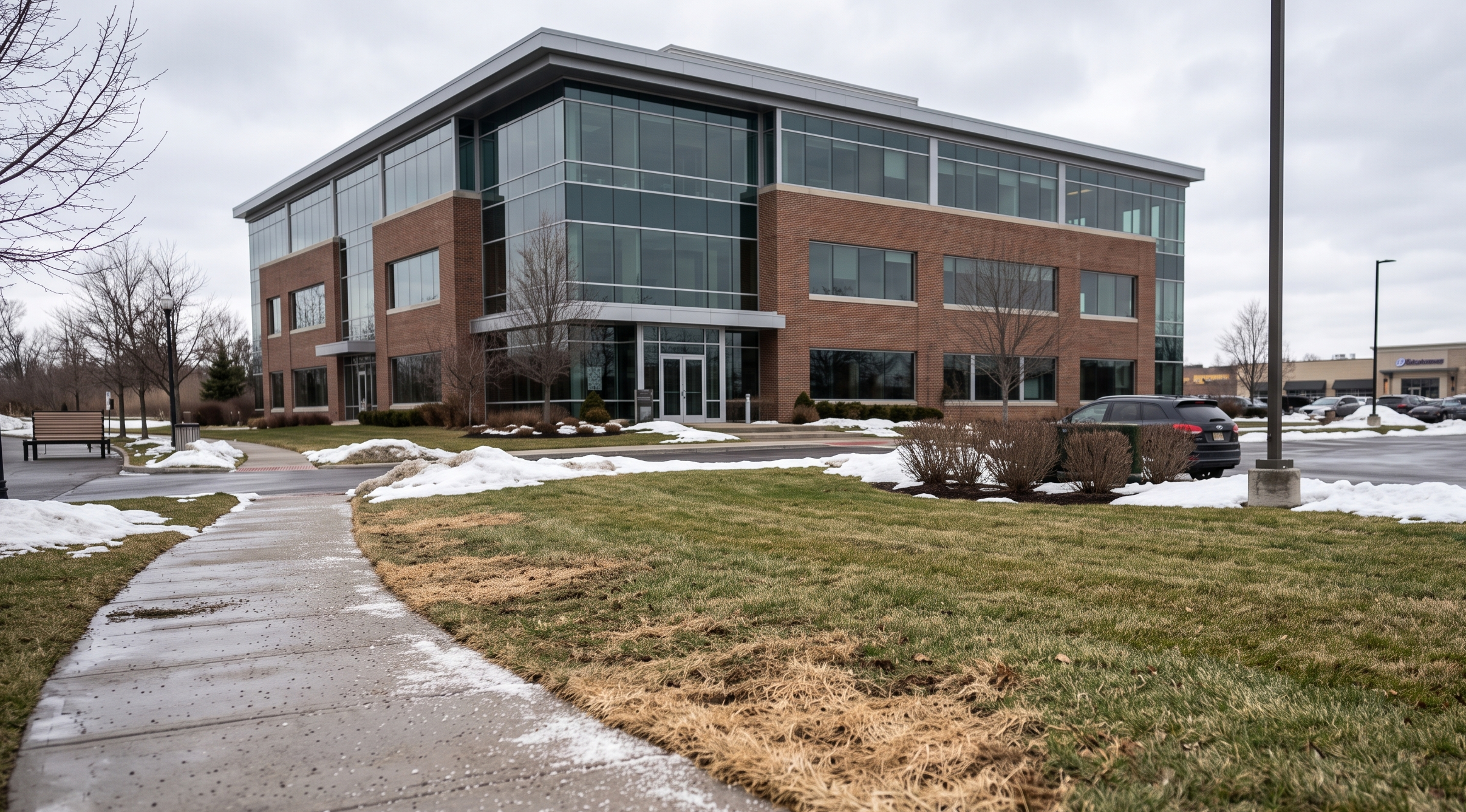
Keeping a sharp, green lawn outside a Buffalo corporate building isn’t easy when winter hits. Between lake-effect snowstorms, sudden freezes, and heavy plow passes, commercial properties in Western New York take a serious beating. But while snow looks clean when it falls, the chemical ice melters used on sidewalks, entryways, and parking lots leave behind real damage once the thaw begins.
Come April, property managers often discover brown, scorched borders along paved edges where grass used to thrive. Understanding why salt ruins turf and how to mitigate it protects your landscape investment and maintains your property’s professional curb appeal year-round.
Frequently Asked Questions
Q: How quickly does road salt start damaging grass in Western New York?
A: Salt damage begins almost immediately upon contact, but physical symptoms—such as browning and dieback—usually become visible in late winter and early spring as the soil thaws and root activity resumes.
Q: Can a corporate lawn recover from salt damage naturally?
A: Minor salt exposure can leach out over time with heavy spring rainfall. However, in heavy clay soil typical of Buffalo, sodium binds to soil particles and requires intentional soil conditioning (like gypsum and deep flushing) to restore grass health.
The Hidden Chemistry of Salt Damage
To understand why deicing compounds strip the life out of commercial turf, you have to look at what happens below the surface in the soil food web.
When rock salt (sodium chloride) or chemical deicers melt ice, the resulting liquid runoff washes directly into the top few inches of topsoil along walkways and parking margins. This creates two distinct problems for cool-season grasses like Kentucky bluegrass, fine fescues, and perennial ryegrass:
- Osmotic Drought (Desiccation): Salt pulls moisture away from plant roots. High sodium concentrations in the soil create an environment where water moves out of the grass roots rather than into them—a process known as reverse osmosis. The turf effectively dies of thirst, even if the ground is soaked with snowmelt.
- Soil Structure Breakdown: Excess sodium displaces crucial structural minerals like calcium and magnesium in clay-rich Western New York soils. This breaks down soil aggregates, causing heavy compaction, poor drainage, and an oxygen-deprived environment where turf roots struggle to breathe.
- Chemical Toxicity: High levels of chloride ions absorbed by root systems travel up into blade tissue, turning leaf tips yellow, then straw-brown, and eventually killing the crown of the plant.
[ Salty Runoff & Meltwater ]
│
▼
[Heavy Sodium Accumulation]
┌───────────┴───────────┐
▼ ▼
[Osmotic Stress] [Soil Compaction]
(Roots lose water) (Loss of Ca/Mg)
│ │
└───────────┬───────────┘
▼
[Brown, Scorched Turf]
Frequently Asked Questions
Q: What is osmotic drought, and how is it different from normal drought?
A: Osmotic drought occurs when salt levels in the soil are so high that water is chemically drawn out of root cells instead of being absorbed, causing grass to dehydrate even in soaked, meltwater-saturated soil.
Q: Why are Western New York soils more vulnerable to salt damage?
A: Buffalo-area soils often contain high amounts of clay. Sodium binds tightly to clay particles, breaking down soil aggregates, destroying natural pore space, and locking salt near the root zone for longer periods.
Identifying Salt Damage vs. Other Winter Issues
Commercial property managers often ask: Is this winterkill, snow mold, or salt damage?
Matching treatment to the specific issue saves thousands in unnecessary reseeding costs. Here is how to spot the difference on a commercial grounds inspection:
- Symptom Pattern: Salt damage strictly follows high-treatment zones—usually a 2- to 6-foot strip right along curb lines, walkways, dumpster pads, and snow-storage areas.
- Visual Appearance: Turf looks completely scorched, dry, and brittle, often accompanied by a white, crusty mineral residue on the soil surface once dried.
- Timing: While snow mold shows up as matted, web-like circles immediately after snow melts, salt damage worsens as spring temperatures rise and the sun draws moisture out of already-stressed root zones.
Frequently Asked Questions
Q: How can I tell the difference between snow mold and salt damage on a corporate lawn?
A: Snow mold leaves matted, crusty patches covered in pinkish or grayish fungal webbing right as snow recedes. Salt damage appears as dry, brittle, straw-brown turf strictly along paved borders and snowpile zones.
Q: Does salt damage mean the grass is completely dead?
A: Not always. If only the top blades are burned, the crown of the plant may still be alive. However, if sodium concentrations remain high in the root zone, the entire root structure will die without remediation.
Professional Prevention Strategies
Preventing salt damage requires a proactive plan built on real-world commercial grounds management experience, not reactive fixes in May.
1. Smart Deicing & Material Selection
Switching from standard rock salt (sodium chloride) to plant-friendlier alternatives drastically reduces root toxicity near turf margins:
- Calcium Magnesium Acetate (CMA): Highly effective at lower temperatures and significantly less corrosive to plant tissue and concrete.
- Magnesium Chloride: Works at lower temperatures than rock salt while requiring lighter application rates.
- Abrasive Mixes: Blending coarse sand or crushed grit with deicers maintains traction while cutting total chemical application in half.
2. Physical Protective Barriers
Installing temporary landscape protection before the first lake-effect storm creates an immediate barrier against plow overspray and salt-laden slush piles:
- Burlap & Turf Covers: Laying high-density burlap held down with sod staples along high-risk sidewalk margins catches salt spray and can be lifted away in early spring.
- Snow Fencing & Markers: Marking curb lines prevents plow drivers from scraping turf or dumping heavily salted snow banks directly onto delicate lawn edges.
3. Drainage & Snow Pile Management
Designate specific snow storage zones on non-turf surfaces or lower-priority lawn zones equipped with proper drainage. Avoid piling deep snow drifts packed with deicing residues on prominent front-entrance lawns.
Frequently Asked Questions
Q: What is the most plant-safe deicing material for commercial walkways?
A: Calcium Magnesium Acetate (CMA) is widely considered the safest option for nearby vegetation and concrete, as it breaks down naturally without releasing heavy chloride ions into the soil.
Q: Will burlap guards along sidewalk edges prevent salt burn completely?
A: High-density burlap or woven turf covers significantly absorb salt spray and plow debris along high-traffic borders, making early spring cleanup much easier and keeping high concentrations of sodium off bare grass crowns.
Buffalo, NY Winter Realities
Buffalo’s unique climate creates specific challenges for commercial lawn health. Heavy lake-effect snowfall, freeze-thaw cycles, and dense municipal salt usage mean soil along paved surfaces absorbs high chemical concentrations every winter.
Lake-Effect Snow Fall ➔ Heavy Salt Application ➔ Freeze-Thaw Cycles ➔ Sodium Accumulation in Clay Soil
Because Western New York soils lean toward heavy clay, salt lingers longer near the root zone instead of washing away naturally. Commercial grounds require targeted flushing and conditioning treatments tailored specifically to local soil profiles to stay green come springtime.
Frequently Asked Questions
Q: Why do frequent freeze-thaw cycles in Buffalo make salt damage worse?
A: Repeated melting and freezing cycles cause salty meltwater to continually seep deep into topsoil along sidewalk borders, concentrating sodium ions right around grass roots before winter ends.
Q: Are certain cool-season grass varieties more salt-tolerant in Western New York?
A: Yes. Tall fescue and perennial ryegrass cultivars generally tolerate higher salinity levels than Kentucky bluegrass, making them ideal options for overseeding along commercial sidewalk margins and parking lot islands.
Spring Recovery Action Plan
If salt has already damaged your commercial borders, immediate step-by-step remediation will restore green turf cover before weeds take over bare spots.
Step 1: Deep Flushing
As soon as the ground thaws, flush salt out of the topsoil. Water-affected lawn edges deeply—applying roughly 1 inch of water every few days across 2 to 3 cycles—to wash sodium ions below the active root layer.
Step 2: Gypsum Soil Conditioning
Apply pelletized agricultural gypsum (calcium sulfate) at a rate of 20 to 40 lbs per 1,000 square feet over damaged borders. Gypsum’s calcium replaces sodium on soil particles, loosening heavy clay, improving drainage, and allowing sodium to leach away easily during rainfall.
Step 3: Aeration & Overseeding
Core aerate compacted margins to pull soil plugs, opening air paths for oxygen and water movement. Overseed bare patches with salt-tolerant grass varieties, such as specific tall fescues or perennial ryegrass blends, top-dressing with rich compost to jumpstart germination.
Frequently Asked Questions
Q: How does agricultural gypsum fix salt-damaged soil?
A: Gypsum supplies calcium, which chemically replaces sodium on clay soil particles. This process breaks up compacted soil structure, allowing water to flush the freed-up sodium down below root levels.
Q: When is the best time in spring to reseed salt-damaged lawn borders in Buffalo?
A: Reseeding should take place in early to mid-spring after flushing the soil and applying gypsum, ideally when soil temperatures consistently reach 50°F to 55°F for quick seed germination.
Serving Commercial Properties Across Greater Buffalo & Western New York
Whether your corporate office is located in downtown Buffalo or the surrounding business parks, winter salt accumulation affects every commercial property in Erie County.
Commercial Lawn Care Near You
If you are searching for experienced commercial lawn care near you or specialized salt damage restoration, our team provides comprehensive winter landscape management, spring soil flushing, core aeration, and turf remediation across the following:
- Amherst & Williamsville: Commercial plazas along Transit Rd, Main St, and Niagara Falls Blvd.
- Cheektowaga & Walden Corridor: Corporate centers and industrial parks near Buffalo Niagara International Airport.
- Downtown Buffalo: Business district courtyards, entryways, and street-front turf margins along Delaware Ave.
- Orchard Park & Hamburg: Southtowns business campuses subject to severe lake-effect snow belts.
Frequently Asked Questions
Q: How do I find commercial lawn restoration services near me in Erie County?
A: Look for commercial landscapers who specialize in soil chemistry treatments—such as liquid flushing and gypsum application—rather than standard mowing crews who simply reseed over salty soil without fixing the underlying compaction.
Q: Can 10x Landscaping manage both winter deicing and spring lawn recovery for my property?
A: Yes. Integrating winter snow management with spring grounds care ensures your property receives salt-conscious clearing strategies during winter storms and instant turf restoration as soon as the thaw hits.
Find 10x Landscaping in Buffalo, NY
Protecting Your Commercial Property’s Value
A well-maintained corporate entrance sets the tone for clients, tenants, and visitors. Don’t let winter deicing ruin your spring curb appeal. Implementing proactive winter management practices and restoring damaged soil early keeps your commercial lawn thick, healthy, and resilient year after year.
Frequently Asked Questions
Q: How can commercial property managers reduce salt damage without compromising pedestrian safety?
A: Safety is always top priority. Managers can balance safety and landscape health by pre-treating surfaces with liquid brine, using calibrated spreader equipment to prevent over-application, and using abrasive sand mixes on low-risk paths.
Q: Should commercial properties hire specialized landscape contractors for spring salt recovery?
A: Yes. Professional contractors have commercial-grade core aerators, soil testing equipment, and tailored soil amendments like gypsum and compost top-dressings designed to rapidly restore heavily damaged turf borders.