


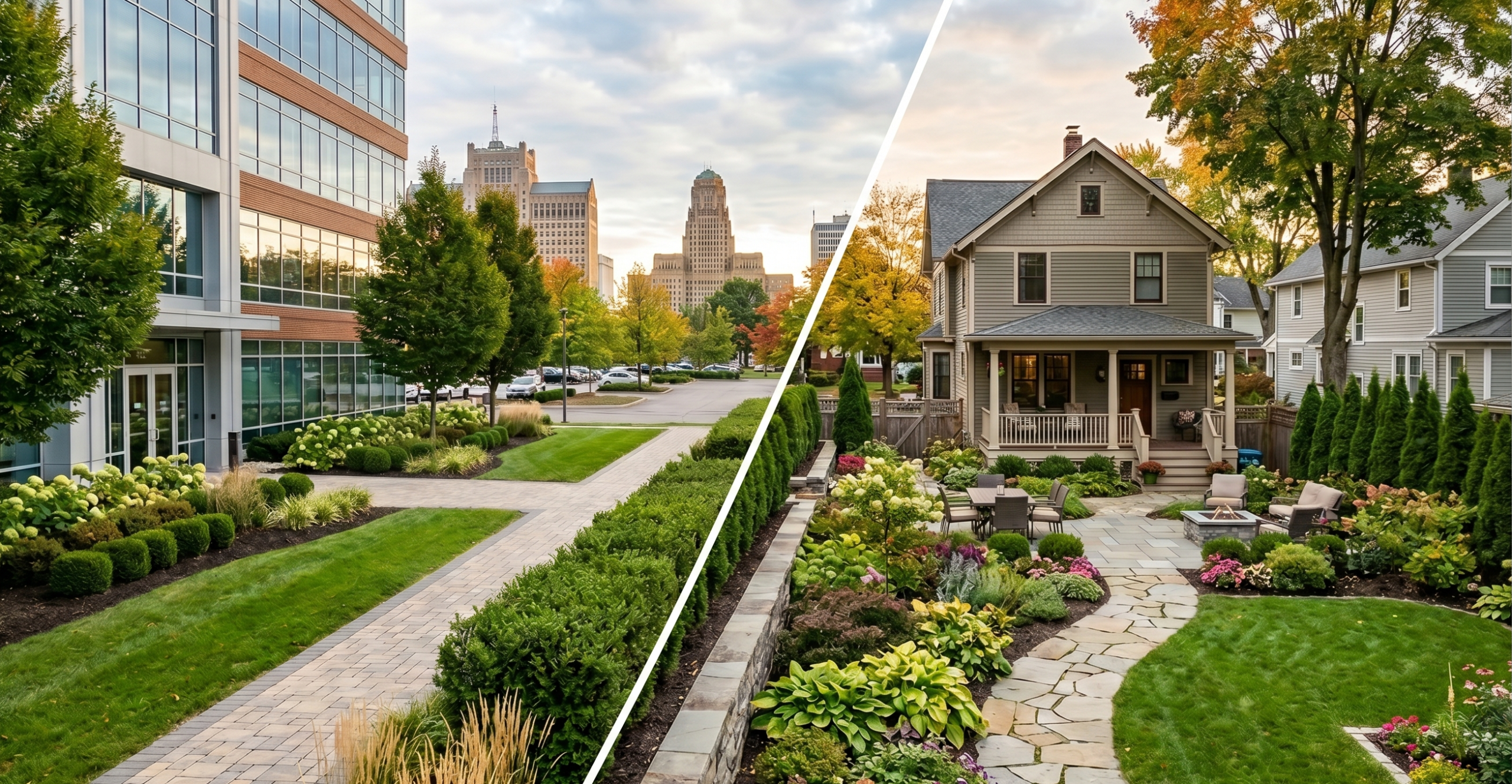
When property owners look to upgrade their outdoor spaces in Western New York, they often realise that a one-size-fits-all approach simply does not work. Whether you are searching on Google for the best regional services or analysing property data, comparing commercial vs. residential landscaping in Buffalo requires a deep understanding of our unique climate, local zoning ordinances, and distinct property goals. While both niches focus on enhancing curb appeal and maintaining healthy green spaces, their core objectives, scopes, design philosophies, and maintenance schedules diverge significantly.
In a region where lake-effect snowstorms can drop feet of snow overnight and hot, humid summers demand resilient turf, understanding these differences is vital for choosing the right outdoor strategy. Having spent years managing diverse landscapes across Erie County, the 10x Landscaping team understands the unique technical demands that separate commercial landscaping projects from residential ones in the Queen City.
1. The Core Objectives: Personal Sanctuary vs. Business Asset
The most fundamental difference between these two forms of landscaping lies in the underlying intent of the property owner.
Residential: Creating a Personal Sanctuary
For a homeowner in Amherst, Orchard Park, or Elmwood Village, the backyard is an extension of the living room. The primary objective is to create a private, comfortable, and visually pleasing environment for family gatherings, relaxation, and personal enjoyment. Residential design highly values privacy, individual aesthetic preferences, and custom features like outdoor kitchens, fire pits, and delicate flower beds.
Commercial: Maximizing ROI and Safety
For a business owner, property manager, or corporate entity in downtown Buffalo or Cheektowaga, landscaping is a functional asset. The goal is to maximise return on investment (ROI) by attracting customers, projecting a professional brand image, and ensuring absolute public safety. Commercial spaces must prioritise clear sightlines to minimise liability, accessible walkways that comply with the Americans with Disabilities Act (ADA), and configurations that direct traffic naturally toward main entrances.
Frequently Asked Questions
Can a residential landscaping company handle a commercial property?
It depends on the scale. While basic turf cutting is similar, many residential companies lack the heavy-duty equipment, commercial liability insurance, and multi-man crews required to service large commercial properties efficiently without disrupting business operations.
Why is liability such a major focus in commercial landscaping?
Commercial properties experience high volumes of public pedestrian and vehicular traffic. Uneven walkways, overgrown bushes blocking sightlines, or poorly cleared ice can lead to slip-and-fall lawsuits, making safety compliance a top priority for business owners.
2. Scale, Scope, and Material Selection
The physical size of the property dictates not only the volume of materials needed but also the types of plants and hardscape features implemented.
Plant Selection and Hardiness
Buffalo sits comfortably within USDA Hardiness Zones 6a and 6b. However, the exact microclimate varies depending on how close a property is to Lake Erie.
- Residential properties can accommodate more delicate, high-maintenance ornamental plants, specimen trees, and intricate perennial gardens because homeowners can give them individual attention.
- Commercial properties require robust, salt-tolerant, and drought-resistant plantings. Think of heavy-duty shrubs like boxwoods, dwarf conifers, and hardy ornamental grasses that can withstand the heavy salt spray from parking lot snow plowing operations and city streets.
Equipment and Logistics
Mowing a half-acre lawn in North Buffalo requires a standard commercial walk-behind or small zero-turn mower. Conversely, maintaining a corporate campus or a retail plaza requires an arsenal of heavy machinery, including large-scale wide-area mowers, industrial aerators, and skid steers for rapid material moving.
Frequently Asked Questions
What are the best salt-tolerant plants for Buffalo commercial lots?
Plants like Eastern Redcedar, Switchgrass, Rugosa Rose, and various native viburnums hold up exceptionally well against the heavy salt spray common along Western New York roadways and parking structures.
Why don’t commercial properties use the same delicate flowers found in backyard gardens?
Delicate flowers require frequent hand-watering, deadheading, and specific soil care. Commercial landscapes favor mass plantings of hardy perennials and dense shrubs that look lush and professional with minimal individual maintenance.
3. Maintenance Schedules and Operational Footprints
How and when the landscaping work takes place is another major point of differentiation when comparing commercial vs. residential landscaping in Buffalo.
Disruption Minimization
A residential lawn crew typically visits once a week during the growing season, spending 30 to 60 minutes on-site. Homeowners usually prefer these visits during standard weekday business hours when they are away at work, leaving them with a pristine yard for the weekend.
Commercial operations must be invisible to the public. Landscaping crews often service retail centres, hospitals, and office parks during late-night or early-morning windows to prevent blocking traffic, taking up valuable parking spaces, or disrupting business transactions.
The Western New York Winter Factor
In Buffalo, landscaping is an all-season commitment. Both sectors require robust winter management, but the legal and operational stakes are vastly different:
| Metric / Feature | Residential Landscaping | Commercial Landscaping |
| Primary Focus | Aesthetics, privacy, and personal lifestyle | Liability reduction, brand image, and structural safety |
| Snow Management Scope | Cleared driveways and basic walkways for family use | Zero-tolerance clearing of massive parking lots and emergency exits |
| Zoning & Compliance | Basic municipal codes and local HOA guidelines | Strict ADA compliance, environmental regulations, and city ordinances |
| Salt Tolerance Needs | Low to moderate | High (due to heavy plowing and industrial de-icing) |
If a homeowner’s driveway isn’t ploughed by 7:00 AM, it’s an inconvenience. If a commercial retail parking lot isn’t completely cleared, salted, and safe for pedestrian traffic by opening time, it represents a massive liability risk and lost revenue.
Frequently Asked Questions
At what hours do commercial landscaping crews typically operate?
To avoid interrupting customers and employees, commercial crews often arrive between 4:00 AM and 7:00 AM, or late in the evening after standard business operating hours.
How does snow removal tie into a landscaping contract in Buffalo?
In WNY, many commercial landscaping firms transition directly into full-time snow and ice management providers during winter, offering year-round site management under bundled corporate contracts.
4. Budgeting, Contracts, and Project Management
The financial structure behind these two types of services reflects their scale and organisational needs.
[Residential Landscape Project]
├── Focus: Upfront material costs, personal aesthetic changes
└── Agreement: Flexible, seasonal arrangements or single-project quotes
[Commercial Landscape Project]
├── Focus: Long-term operational costs, multi-year asset planning
└── Agreement: Rigid Service Level Agreements (SLAs), detailed line-item bids
Residential projects are typically funded out of pocket or through personal home improvement loans. Homeowners negotiate directly with the contractor, making decisions based on immediate visual appeal and personal budget limits.
Commercial landscaping relies heavily on corporate budgeting cycles, property management approvals, and strict competitive bidding processes. Contracts are detailed, multi-page legal documents containing specific service level agreements (SLAs), comprehensive liability insurance requirements, and precise line-item cost allocations for every trimming, weeding, and ploughing event.
Frequently Asked Questions
Are commercial landscaping contracts more expensive than residential ones?
Yes, due to the square footage, frequency of service, specialized equipment demands, and extensive liability coverage required, commercial contracts carry a much higher financial footprint but cover vast operational scopes.
What is a Service Level Agreement (SLA) in landscaping?
An SLA is a contract clause that explicitly defines the exact standards the contractor must meet—such as promising that grass will never exceed 3 inches in height or that snow will be cleared within 2 hours of a 2-inch accumulation.
5. Local Regulations, Zoning, and Permits
Buffalo’s rich architectural history and environmental focus mean that local compliance is an essential part of any major outdoor modification.
Buffalo Green Code
Commercial developments within the city limits must align with the Buffalo Green Code (the city’s unified development ordinance). This framework places high emphasis on smart growth, walkability, and green infrastructure. Commercial landscaping plans frequently require formal approvals demonstrating specific canopy coverage percentages, stormwater management solutions (like bioswales and rain gardens), and the deliberate integration of native plant species.
Residential Adjustments
While residential properties have fewer bureaucratic hurdles, homeowners must still adhere to local town ordinances regarding fence heights, property setbacks, and pool enclosures. Working with an experienced local contractor ensures that your new privacy hedges or retaining walls won’t violate municipal codes in areas like Tonawanda, West Seneca, or Lancaster.
Frequently Asked Questions
Does the Buffalo Green Code apply to residential backyards?
Generally, no. The strict landscape standards regarding canopy minimums and specific stormwater mitigation systems target commercial zones, multi-family complexes, and new structural developments.
Do I need a permit to plant trees on a commercial property in Buffalo?
Major commercial overhauls or changes to site plans usually require a site plan review by the local municipal planning board to ensure zoning and environmental codes are respected.
6. Looking for Top-Tier Landscaping Near Me?
If you are a business owner or a homeowner searching for premier landscaping near me in the Western New York area, finding a team with a localised operational footprint is key. Your landscaping needs are highly dependent on your exact location within the regional grid.
Whether your property sits near the severe lake-effect corridors of Hamburg and Orchard Park or within the highly regulated historic parameters of the Delaware District, proximity matters. Working with a neighborhood contractor ensures rapid response times for seasonal lawn transformations, swift communication, and priority scheduling when unexpected seasonal weather hits.
Frequently Asked Questions
Why should I choose a local landscaping company near me instead of a national chain?
Local crews possess firsthand knowledge of specific local soil conditions, immediate regional microclimates, and unique town ordinances, allowing them to provide personalised service that large, distant corporate chains simply cannot replicate.
How fast can a nearby landscaping service respond to seasonal weather changes?
Proximity translates directly into speed. When sudden spring frosts or heavy summer rainfalls impact your lawn health, a local service provider can adjust schedules and dispatch trucks to your property within hours.
Making the Right Choice for Your Buffalo Property
Ultimately, comparing commercial vs. residential landscaping in Buffalo emphasises the necessity of matching your project with a crew that holds the precise experience, equipment, and structural understanding your space demands. Residential landscaping transforms a house into a warm, inviting home, while commercial landscaping protects and enhances the commercial value of a business investment.
Are you looking to enhance your property’s exterior performance and visual appeal? Partnering with an established, locally grounded team guarantees your landscape can effortlessly navigate the challenging Western New York elements all year round.
Frequently Asked Questions
Can one provider handle both types of properties effectively?
Yes, established mid-to-large regional firms often maintain dedicated, separate divisions staffed with specialized crews—one optimised for residential detail work and another equipped for industrial commercial management.
How often should a landscaping plan be updated in Western New York?
A thorough review every 3 to 5 years is ideal to assess plant health, check for hardscape shifting due to freeze-thaw cycles, and refresh mulch beds or design highlights to maintain high property values.
Be The First To Comment