


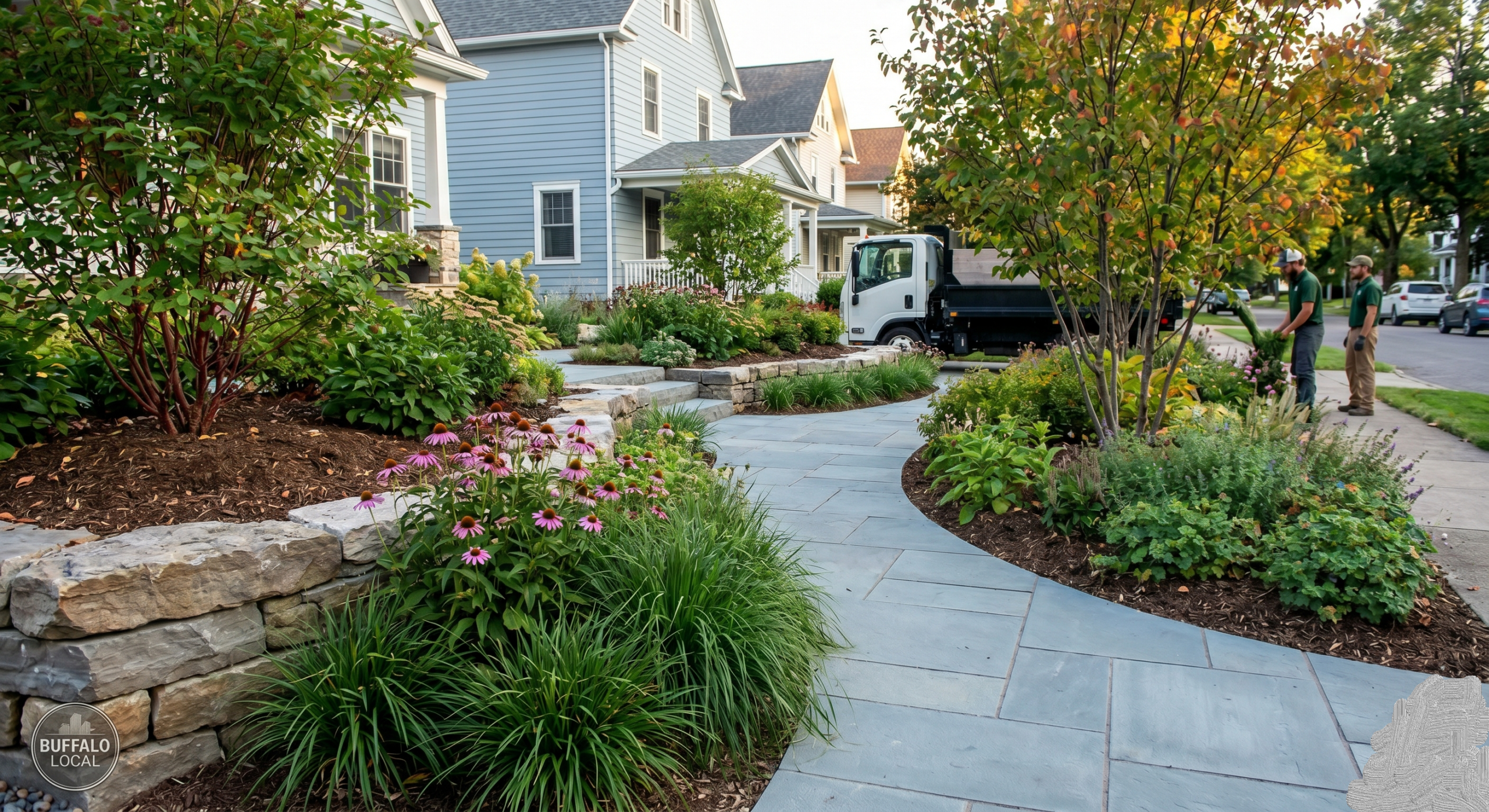
Let’s be honest: gardening and hardscaping in Western New York isn’t for the faint of heart. If you live here, you know the exact drill. You watch your yard get buried under feet of heavy Lake Effect snow in Hamburg, battle sticky, dense clay soil that retains water like a sponge in Amherst, and cross your fingers during those volatile late-spring freezes.
When it comes to transforming your outdoor property, generic advice from national blogs won’t cut it. You need custom local expertise that understands the literal groundwork of Erie County. For residential upgrades that survive the brutal North American winters and thrive during our gorgeous summers, investing in expert landscape installation in Buffalo, NY, ensures your yard is built on a foundation of structural integrity, proper drainage, and climate-resilient plant choices.
Why Buffalo Landscapes Require a Specialized Approach
Designing a sustainable, stunning outdoor living space in our region comes down to understanding two major environmental factors: soil composition and heavy snow loads.
To run the Buffalo clay test on your property, you should begin by digging a twelve-inch hole anywhere in your yard. Once the hole is ready, fill it completely with water and allow it to drain out naturally. After the first fill drains, fill the hole completely a second time to see how long the water sits. If the water takes greater than four hours to empty during this second run, you have confirmed the presence of true Western New York clay soil. Most plant root systems will rot quickly in this dense environment unless you implement proper soil modification or construct a raised installation.
Much of Buffalo and its surrounding suburbs sit on heavy, compacted clay. When you plant a new shrub or tree directly into a basic hole dug into this clay, you essentially create a bathtub effect where rain and melted snow pool in the hole, drowning the roots and causing root rot. Professional installers never just dig and drop; they systematically amend the site with rich organic compost or design raised planting beds to lift root systems completely above the stagnant water line.
The cold isn’t what kills most landscape investments in Zone 6b, but rather the crushing weight of heavy, wet snow. Stiff, brittle trees easily snap under the pressure of a classic Buffalo blizzard. Local specialists select trees with flexible wood structures and distinct winter silhouettes that can bend under a snowbank and snap right back up come spring.
Frequently Asked Question
Why is lawn and bed drainage such a massive problem around Erie County?
The geological history of the Great Lakes region left behind highly dense clay deposits from ancient glacial activity. Because these microscopic clay particles pack tightly together, they leave very little room for water to drain downward, which creates slow-draining lawns throughout the Niagara Frontier.
The Elements of an Expert Landscape Installation
A successful, long-term property transformation relies on a balanced blend of living horticulture, known as softscaping, and structural masonry, known as hardscaping.
To build an eco-friendly yard that supports local biodiversity while still offering vibrant curb appeal, modern designs utilise a ratio of seventy per cent native plants to thirty per cent adapted ornamental choices. Native flora naturally adapts to local pest pressures and weather extremes without requiring constant chemical intervention.
Serviceberry is a local favourite offering white spring blooms, edible summer berries, fiery autumn foliage, and elegant grey bark patterns in winter. Coneflowers and switchgrass are deep-rooting perennials that stabilise soil and easily survive unpredictable freezing cycles. Red Twig Dogwood is highly valued for its elastic branches and brilliant red stems that provide striking visual contrast against white winter snow.
Patios, retaining walls, and walkways in Western New York take a severe beating because as moisture in the ground freezes and expands, it causes the soil to shift in a phenomenon known as frost heave. If a hardscape element is installed without a deep, highly packed gravel sub-base and proper geotextile fabric, your beautiful stone patio will become uneven and cracked within two seasons. Proper installation requires excavating past the local frost line and engineering pitching angles that direct pooling water completely away from your home’s foundation.
Frequently Asked Question
What planting zone is Buffalo, NY?
Buffalo and the immediate Western New York suburbs generally fall into USDA Hardiness Zones 6a and 6b. This climate classification means permanent perennial selections must be rated to comfortably survive winter lows down to negative ten degrees Fahrenheit.
Your Seasonal Landscape Timeline
Timing is everything in New York, meaning that to get the most out of your installation, project phases must align perfectly with our compressed growing season.
Design & Material Selection
January – March
This is the ideal window to map out architectural layouts, secure municipal permits, choose stone profiles, and pre-order slow-growing nursery stock before the busy spring rush begins.
Hardscape Excavation
Late April – May
Once the ground thaws completely and the last spring frost passes, heavy equipment can safely begin grading, installing drainage trenches, and laying heavy patio bases.
Primary Softscape Planting
September – October
While spring is popular, early autumn is actually the golden window for planting trees and perennials in Buffalo because the cooler air reduces shock while the warm soil allows roots to establish securely before winter dormancy.
Frequently Asked Question
When is the safest time to plant annuals and delicate shrubs in Buffalo?
The traditional safety threshold for planting delicate annuals or warm-weather crops across Erie County is Memorial Day weekend. While early warm spells in April can be tempting, Western New York is notorious for late-season frosts in early May that will instantly kill tender flowers.
Finding Trusted Landscape Installation Near Me
When search engines crawl proximity requests, they look for authentic proof that a service provider routinely works within specific geographic boundaries. If you are searching for high-quality landscape installation near me, your primary goal should be finding a team that actually understands the localised microclimates across our city’s distinct neighbourhoods.
A landscape plan designed for a waterfront property near the high winds of Lake Erie in South Buffalo requires vastly different structural considerations than a sheltered backyard project situated further inland over in Lancaster or Depew. True proximity value isn’t about arbitrary radius circles on a map; it comes down to a team’s real-world history of executing successful site cleanups, retaining wall builds, and drainage solutions on the exact streets where you live and work.
Frequently Asked Question
How far in advance should I book a local landscape project near me?
Because the Western New York outdoor build window is exceptionally tight, premier local crews often finalise their spring and summer installation schedules by late February or March. Booking your consultation at least three to four months ahead ensures proper design mapping and secures your place in the active construction queue.
Maximizing Value and Local Authority
When you’re ready to hire a crew to transform your property, looking beyond a simple online ad is vital for safeguarding your investment. True local authority and expertise are reflected in structural signals.
Look for real case studies showcasing properties in Orchard Park, Clarence, or Williamsville that have successfully weathered multiple winters. Ensure your chosen professional maintains an updated Google Business Profile showing recent, hyper-local reviews and active links to current liability insurance and workers’ compensation frameworks. A true Western New York expert will immediately talk to you about drainage, soil acidity, and snow management paths before they ever mention aesthetic styling choices.
Frequently Asked Question
How do I protect a freshly installed landscape from winter damage?
For the first two seasons after installation, young trees should have their trunks wrapped to prevent sudden frost cracks from extreme temperature shifts. Additionally, applying a three-inch layer of organic shredded bark mulch helps insulate vulnerable root zones, while burlap screening can protect broadleaf evergreens from drying winter winds.
Securing Your Property Transformation
Ultimately, bringing a major outdoor vision to life requires balancing your personal aesthetic goals with practical engineering standards. Working with a dedicated team that provides expert landscape installation in Buffalo, NY, ensures that your walkways won’t buckle, your backyard won’t flood, and your new plant features will return beautifully year after year. Taking the time to properly vet local credentials and plan your project around the local seasonal timeline is the best way to maximise your home’s equity and build an exceptional outdoor living area.
Frequently Asked Question
What is the first step in getting a professional landscape layout started?
The process always kicks off with an on-site evaluation where professionals analyse the property’s sunlight patterns, measure active slope variations, test the soil density, and map out existing drainage lanes. This groundwork creates a precise master plan that ensures your upcoming construction phase runs perfectly smoothly from start to finish. Click here to get a professional landscape layout started today.
Be The First To Comment