


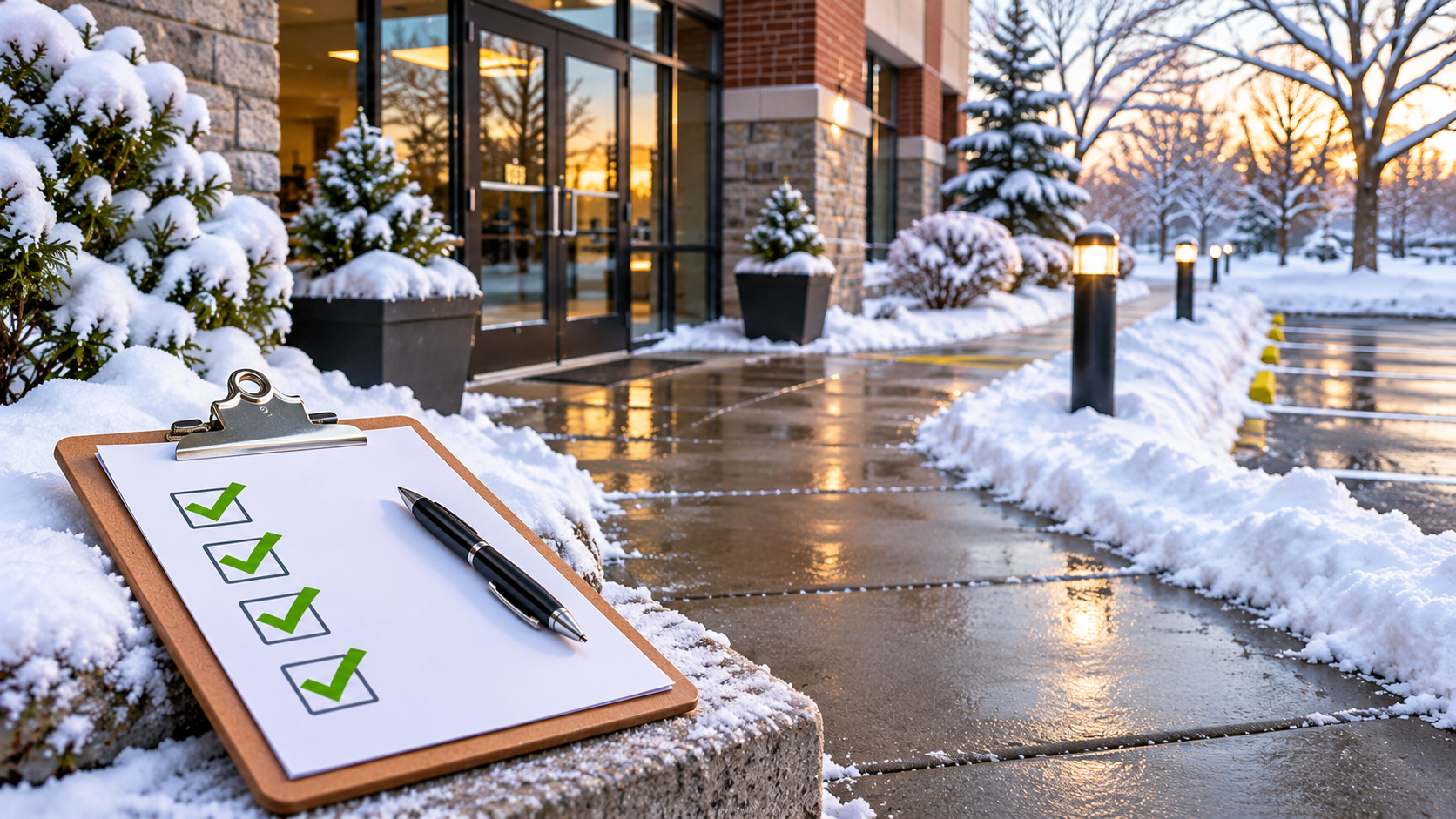
The plow trucks have left, the lot looks clear, and the pressure to open the doors starts building. This is exactly the moment when a quick, structured walk-through pays off. A plow clears snow. It doesn’t tell you what’s about to turn to ice, what’s blocking a drain, or what’s hanging over your front door.
At 10x Landscaping & Snow Plowing Service, we plow and salt driveways, commercial lots and multi-property sites around Orchard Park and Buffalo, and we think the post-storm walk is an often-overlooked part of winter property care. This guide gives you a practical route to follow, what to look for at each stop, and what to write down. It works for a plaza, an office, an apartment complex or a large private property.
As always, we’re snow professionals, not safety engineers or lawyers. Treat this as a practical checklist and follow your own safety rules, insurer requirements and local codes. A full disclaimer is at the end.
Before You Walk: Set Up the Inspection
A good walk-through takes 15 to 30 minutes on most sites. A few ground rules make it worth doing:
- Do it in daylight if you can. Ice and drainage problems are easier to spot, and photos are clearer. If the storm ended at night, do a first pass with good lighting and a second in the morning.
- Check the forecast first. Pull up National Weather Service Buffalo so you know whether temperatures are about to rise, fall, or swing both ways.
- Bring a phone and a basic kit. Camera, a notes app, a small shovel or ice scraper, and a bag of de-icer for quick fixes.
- Use the same route every time. A consistent order is how you avoid missing the back door.
- Write down the basics. Date, time, who walked, and what the weather did. That record is the foundation of the log we describe in our guide to winter slip-and-fall liability.
Stop 1: Entrances, Exits and Walks
Start where people will actually step. Entrances are where tracked-in slush refreezes, where mats get soaked, and where one slick patch can undo a good plow job.
- Front and side entrances. Look for ice just outside the door, at the threshold and under any canopy drip.
- Emergency exits and egress paths. Doors must open fully, and the path beyond them has to be clear. OSHA’s walking-working surfaces rule requires employers to keep surfaces free of hazards such as snow and ice, and one compliance publisher notes that it applies to parking lots and emergency egress paths where employees use them.
- Steps, ramps and handrails. These often sit outside the plow route. Check each tread, and make sure accessible ramps are clear and treated, not just cleared.
- Public sidewalks out front. In Buffalo, the code requires owners and occupants to clear the sidewalk before 9:00 a.m. Other municipalities have their own rules, so check yours.
- Mats and interior transitions. Wet floors just inside the door are part of the same hazard.
How soon after a storm should I walk the property?
As soon as the crew has finished and it’s safe to do so, then again before opening if temperatures are dropping. One walk may not be enough on a day that thaws and refreezes.
Does the walk-through replace what my contractor does?
No. Your contractor clears and treats the site. The walk-through is your own check that the result matches what you need, and it gives you a record of conditions.
Stop 2: Parking Lots and Drive Lanes
Once the entrances check out, move to the lot. Standing at the edge for a minute tells you more than you’d expect. Look for the big picture first, then walk the details.
- Drive lanes and fire lanes. Wide enough for delivery and emergency vehicles, not narrowed by pile growth.
- Accessible parking. Stalls, access aisles and routes to the door should be clear and treated.
- Sight lines. Snow piles at exits and corners can hide pedestrians and oncoming cars. If you can’t see around it, move it.
- Pile placement. Piles should sit away from drains, entrances, hydrants and walkways, in the spots agreed in your plan.
- Plow damage. Look for bent signs, broken bollards, scraped curbs, damaged lights and gouged turf while the evidence is fresh.
If your service contract spells out stacking areas, response times and reporting, this stop is easy. If it doesn’t, our guide to what belongs in a commercial snow removal contract covers the language to ask for.
Stop 3: The Refreeze Check
This is an easy step to skip, and in a region with frequent thaw-and-freeze swings it’s worth doing. Snow doesn’t just sit there. It melts in the afternoon sun, runs downhill, and freezes again when the temperature drops. A lot that looks clear at 3 p.m. can be glazed by 6 a.m.
Where to look
- Under and around plow piles. Meltwater leaves the pile and follows the slope, often across a walkway or drive lane.
- Downspout discharge points. Roof drainage keeps flowing after the sky clears.
- Shaded north and east sides. Spots that never see sun stay slick long after the rest of the lot dries.
- Low spots and the edges of drains. Water pools, then freezes in a sheet.
- Entrance aprons and loading areas. Constant traffic keeps these wet and messy.
- Cracks, seams and dips in pavement. Water collects in them and turns to ice first.
What to do about it
If melt is running toward a walkway, redirect it, move the snow that’s feeding it, or treat the area before temperatures fall. Federal guidance on winter weather says that after a storm, snow and ice should be cleared from walking surfaces and de-icer applied as quickly as possible. Then re-check later in the day, because the first walk only shows you what’s there now.
Is one salt application enough after a storm?
Not always. Salt works within temperature limits, and melting snow can keep adding water. If conditions are swinging above and below freezing, plan on another look and possibly another application.
What’s the best time of day for a refreeze check?
Late afternoon, before temperatures drop, and again early the next morning. The first tells you what’s about to freeze. The second shows what did.
Want a crew that handles the ice, not just the snow?
Ask 10x Landscaping & Snow Plowing Service about salting and de-icing, return visits and service reports for your Orchard Park or Buffalo property.
Stop 4: Drains, Hydrants, Vents and Safety Equipment
This stop is easy to forget because none of it is on your walking route. It’s also where problems get expensive or dangerous.
Storm drains and catch basins
When snow melts, it needs somewhere to go. After the 2014 Buffalo-area storm, a National Weather Service meteorologist warned that snow and uncollected leaves could block catch basins, adding to flooding worries as temperatures climbed. Check that drains on and near your property aren’t buried or blocked, and keep plow piles off them.
Fire hydrants
If a hydrant sits on or beside your property, clear it. Local rules vary, but many municipalities ask for at least three feet of clear space around it. A New York village’s winter guidance also recommends a clear path to the street, and cautions against chipping ice off the hydrant itself.
Vents and gas meters
The same village guidance says furnace vents should be kept clear of snow and ice because a blockage can lead to carbon monoxide poisoning, and that gas meters should be cleared gently with a broom, not hit or kicked. If you rent space or manage a building, make sure someone is responsible for these. If you smell gas or suspect a carbon monoxide problem, leave and call emergency services.
Fire lanes, exits and other equipment
Confirm that fire lanes are open and that any sprinkler or fire-department access points can be reached. If you aren’t sure what your building has, ask your fire marshal or insurance provider.
Stop 5: Roofs, Overhangs and Falling Ice
Look up before you walk under anything. Icicles, ice on canopies, and heavy snow on rooflines are hazards for anyone standing near entrances and walkways.
- Look from the ground. Check eaves, canopies, signs and anywhere ice could drop onto a door or walk.
- Mark or block drip zones. If ice is hanging over an entrance, keep people away until it’s dealt with.
- Watch for roof stress. After the 2014 storm, rain falling on heavy snow raised roof-collapse concerns. Sagging, new cracks, sticking doors or unusual noises are warning signs to take seriously.
Please don’t climb up to take a look. OSHA’s winter weather guidance tells employers to consider ways to avoid roof work and to provide fall protection and training when work at height is unavoidable. A ground-level observation and a call to a qualified roofer or engineer is the safe way to handle it.
Stop 6: Landscaping and Property Damage
As a landscaping company, we’d be remiss not to mention what happens to the grounds. A quick look now helps separate storm damage from plow damage and gives you something to point to later.
- Compacted snow piles on shrubs, small trees or beds.
- Salt-stained or browning edges where treated runoff collects.
- Torn turf, scraped edging and displaced pavers along plow lines.
- Damaged irrigation heads, landscape lights, mailboxes and signs.
Photograph anything you find, note the date, and share it with your contractor promptly. Fast, factual reporting makes resolving a question much easier.
The Post-Storm Property Checklist
Here’s the walk in one place. Copy it into your notes app and use it after every storm.
| Area | What to check | Fix or record |
|---|---|---|
| Entrances and egress | Ice at thresholds; exits open; paths clear | Treat; clear; photo |
| Walks, steps, ramps | Ice, slush, handrails, accessible routes | Treat; barricade if unsafe |
| Public sidewalk | Cleared to local requirement | Clear; note time |
| Lot and drive lanes | Widths, fire lanes, accessible stalls | Re-push; flag to contractor |
| Sight lines and piles | Exits, corners, pile location | Move or reduce piles |
| Refreeze zones | Pile runoff, downspouts, shade, low spots | Redirect; treat; re-check later |
| Drains and catch basins | Buried or blocked | Clear; keep piles off |
| Hydrants | About three feet clear plus path | Clear; do not chip ice |
| Vents and gas meters | Free of snow and ice | Clear gently by hand or broom |
| Roofs and overhangs | Icicles, heavy snow, sagging | Block zone; call a pro |
| Grounds and fixtures | Plow or snow damage | Photo; report promptly |
| Log | Time, weather, photos, actions | Save to shared file |
A simple go / no-go for reopening
- Go: entrances and egress clear and treated, lot usable, no active refreeze zones, hazards marked or fixed, log completed.
- Hold or limit access: icy entrances, blocked exits, overhead ice, flooding or any unresolved safety issue. Fix it first, or restrict the affected area.
For help picking a crew that can handle the follow-up work, our guide to the questions to ask a snow removal contractor is a good start, and our post on when to book snow removal explains why to sort it out before the first storm.
Need a crew that does the follow-up, too?
10x Landscaping & Snow Plowing Service handles commercial lots, private roads and multi-property sites in Orchard Park, Buffalo and surrounding Erie County. See our snow removal services and snow plowing services, or call us directly.
- Commercial lot plowing
- Private roads & multi-property sites
- Salting & de-icing
or email sales@10xlandscaping.com