


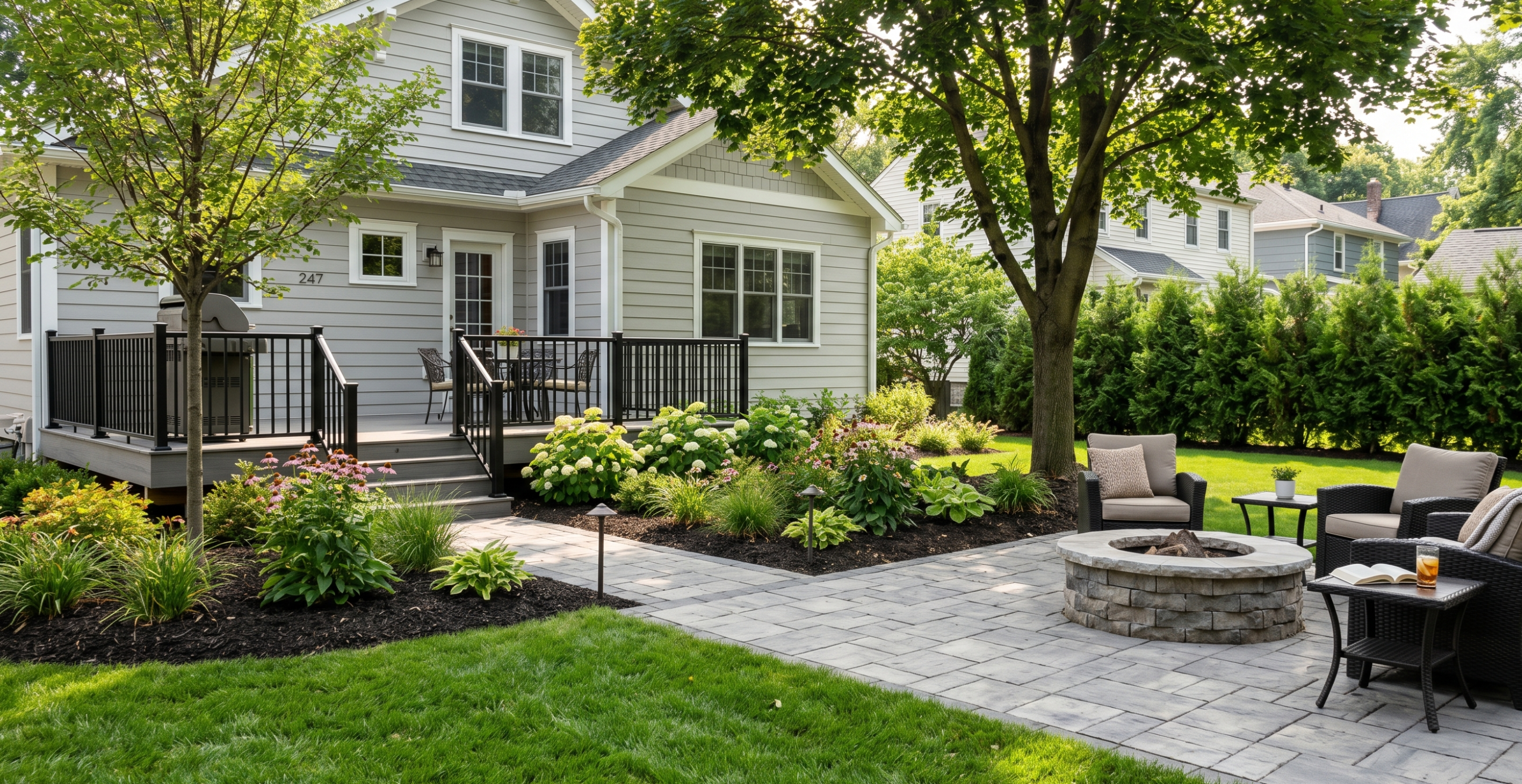
If you are looking to maximise your property value in Western New York, investing in your outdoor spaces is one of the smartest decisions you can make. However, not all outdoor upgrades are created equal. Buffalo homeowners often ask us which renovations yield the highest return on investment (ROI) while enduring our unique, four-season climate. By focusing on strategic landscaping ROI projects for Buffalo homeowners, you can dramatically boost your home’s curb appeal, expand your usable living space, and secure a substantial financial return when it’s time to sell.
At 10x Landscaping, we have spent years transforming Western New York yards. We understand that a successful landscape design in Buffalo must look spectacular during our beautiful summers while remaining resilient through our notoriously harsh, lake-effect winters.
Here is our definitive, data-backed guide to the top 10 landscaping projects that offer the highest ROI for Buffalo properties.
1. High-Efficiency Outdoor Lighting
- Estimated ROI: 100% – 110%
- Why it works in Buffalo: With early winter sunsets and long dark evenings, outdoor lighting drastically extends the usability and safety of your property.
- The Strategy: Avoid cheap, solar-powered stakes from big-box stores. High-quality, low-voltage LED architectural and landscape lighting highlights your home’s best features, illuminates walkways, and adds a layer of security. Prospective buyers love pulling up to a beautifully illuminated home during a gloomy evening inspection.
Frequently Asked Questions
Q: Do solar landscape lights add any value to a home appraisal?
A: Generally, no. Appraisers and buyers view cheap solar stakes as temporary, personal property rather than permanent home improvements. Professional low-voltage LED systems wired into the home’s electrical grid are viewed as true capital improvements.
Q: How do cold Buffalo winters affect low-voltage lighting systems?
A: High-quality brass or aluminium fixtures withstand freezing temperatures well, but the main risk is wire disruption from frost heaving. Professional installation ensures lines are buried deep enough and fixtures are anchored securely against the freeze-thaw cycle.
2. Standard Lawn Care and Maintenance
- Estimated ROI: 150% – 200%
- Why it works in Buffalo: According to the National Association of Realtors (NAR), simple lawn care recovers the highest percentage of its cost at sale. Lake-effect winters can leave lawns compacted, patchy, and prone to snow mold.
- The Strategy: Consistent aeration, overseeding, and regular fertilisation treatments are essential every spring and fall. A lush, vibrant green lawn signals to buyers that the entire property has been meticulously maintained.
Frequently Asked Questions
Q: When is the best time to aerate and overseed a lawn in Western New York?
A: Late summer to early fall (late August through September) is the absolute best time for Buffalo lawns. The soil is warm, the autumn rains are coming, and weed competition is low, allowing new grass roots to establish before winter.
Q: What is snow mold and how do I prevent it from ruining my spring curb appeal?
A: Snow mold is a fungal disease that develops under heavy snow cover on long grass. To prevent it, keep mowing your lawn until it stops growing in late autumn, and make sure your final cut of the season is slightly shorter than usual (around 2 inches).
3. Natural Stone or Paver Patio Installation
- Estimated ROI: 70% – 85%
- Why it works in Buffalo: Buffalo summers are gorgeous, but they fly by quickly. Local homeowners want to maximise every second of patio season.
- The Strategy: A well-designed paver or natural flagstone patio creates a defined outdoor living room. To survive the severe freeze-thaw cycles of Erie County, the patio must be installed with a deep, properly compacted gravel base and excellent drainage. Shoddy DIY patios will shift and buckle within two winters, destroying your investment.
Frequently Asked Questions
Q: Which is better for a Buffalo climate: stamped concrete or interlocking pavers?
A: Interlocking pavers are highly recommended for the Buffalo region. Stamped concrete looks beautiful initially but is prone to cracking when the ground shifts during harsh winters. Pavers are flexible; if the ground moves, individual units shift slightly and can be easily reset without destroying the entire layout.
Q: How deep does the gravel base need to be for a durable patio in WNY?
A: Because of our heavy clay soils and deep frost depths, a pedestrian paver patio in Buffalo requires a minimum compacted base of 6 to 8 inches of crushed stone, plus a 1-inch bedding sand layer.
4. Strategic Tree Planting (Native Species)
- Estimated ROI: 100%+ over time
- Why it works in Buffalo: Mature trees add undeniable character and beauty to local neighborhoods like Amherst, Orchard Park, and Elmwood Village. They also act as natural windbreaks against biting winter winds and provide shade that lowers summer cooling bills.
- The Strategy: Plant native varieties such as sugar maples, white oaks, or eastern redbuds. Native trees adapt better to Buffalo’s clay-heavy soils and require less maintenance, assuring future buyers of their longevity.
Frequently Asked Questions
Q: Where should trees be planted to maximise energy savings and ROI?
A: Plant deciduous trees (those that drop leaves) on the south and west sides of your home to block intense summer afternoon sun. Plant evergreens on the north and northwest sides to act as a shield against freezing winter winds.
Q: How far away from the house foundation should a new tree be planted?
A: As a general rule, plant medium-to-large trees at least 15 to 20 feet away from your home’s foundation to prevent roots from interfering with utilities or basement walls as the tree matures.
5. Front Walkway and Curb Appeal Refresh
- Estimated ROI: 90% – 100%
- Why it works in Buffalo: Your front entrance is a buyer’s very first impression. Over time, concrete walkways crack due to shifting winter frost.
- The Strategy: Replace cracked concrete paths with elegant, interlocking pavers. Frame the walkway with low-maintenance, hardy perennials like hostas, coneflowers, and ornamental grasses that bounce back beautifully year after year without demanding constant watering.
Frequently Asked Questions
Q: What are the best salt-resistant plants for front walkways near roads and driveways?
A: De-icing salt can ruin delicate roots. Opt for tough, salt-tolerant plants like boxwoods, daylilies, rugosa roses, and various ornamental grasses that can tolerate winter salt spray from shovelling and ploughing.
Q: Should I seal my front paver walkway, and how often?
A: Sealing isn’t strictly mandatory, but it protects the pavers from oil stains, salt damage, and color fading. In Buffalo, sealing every 3 to 5 years after a deep power wash is ideal.
6. Privacy Screen Landscaping (Living Walls)
- Estimated ROI: 80% – 90%
- Why it works in Buffalo: Many Buffalo suburbs feature closely situated properties. Homeowners highly value privacy, but traditional wooden fences can rot, warp, and require constant staining.
- The Strategy: Create a “living fence” using dense, fast-growing evergreens like Arborvitae (Thuja occidentalis) or Canadian Hemlock. Not only do they provide year-round privacy from neighbors, but they also remain vibrant and green against the stark white of winter snow.
Frequently Asked Questions
Q: Which type of Arborvitae is best for narrow spaces in local backyards?
A: The ‘Emerald Green’ Arborvitae is excellent for tight spaces because it grows vertically (12-15 feet) but stays narrow (3-4 feet wide), meaning it won’t crowd out smaller suburban yards.
Q: How do I protect a young evergreen privacy screen from heavy snow damage?
A: Heavy, wet lake-effect snow can splay branches apart. For the first few winters, wrapping multi-stemmed evergreens lightly with twine or burlap can keep branches unified and prevent ice breakage.
7. Fire Pit or Outdoor Fireplace Addition
- Estimated ROI: 65% – 80%
- Why it works in Buffalo: What better way to stretch the outdoor season into chilly October and November than with a cosy fire?
- The Strategy: A built-in stone fire pit or custom outdoor fireplace acts as a major emotional selling point. Buyers instantly envision themselves roasting marshmallows during crisp autumn Bills tailgates right in their own backyard.
Frequently Asked Questions
Q: Does a wood-burning or gas fire pit offer a better financial return?
A: Wood-burning fire pits are cheaper to install and offer that nostalgic campfire experience buyers love. However, gas fire pits connected to a natural gas line offer higher convenience and zero smoke and are often seen as a premium feature that yields a steadier appraisal boost.
Q: Are there local safety regulations regarding backyard fire pits in Erie County?
A: Yes, local ordinances vary by town (e.g., Amherst vs. the City of Buffalo). Most municipalities require open fire features to be located a minimum of 15 to 25 feet away from any structure or combustible material. Always verify with your specific town hall.
8. Professional Mulching and Edge Definition
- Estimated ROI: 120% – 150%
- Why it works in Buffalo: This is the ultimate low-cost, high-impact weekend or professional project. Spring thaw often leaves garden beds looking messy and washed out.
- The Strategy: Redefining garden bed borders with clean, deep edges and laying down fresh, dark hardwood mulch instantly makes a property look manicured. Mulch also retains vital moisture for your plants during hot July spells and insulates root systems before the winter freeze.
Frequently Asked Questions
Q: Is dyed mulch (black/red) safe for my plants, or should I use natural brown?
A: Modern dyed mulches from reputable suppliers use organic, pet-safe dyes (typically carbon or iron-oxide-based). Black mulch offers a striking, modern contrast against light-coloured Buffalo homes, while natural dark brown offers a timeless look. Avoid unaged wood chips that steal nitrogen from your soil.
Q: How deep should the mulch layer be in my garden beds?
A: Keep the depth between 2 to 3 inches. Tossing on too much mulch creates a suffocating blanket that stops water from reaching the soil and can attract pests to your home’s foundation.
9. Decks and Multi-Level Outdoor Living Upgrades
- Estimated ROI: 65% – 75%
- Why it works in Buffalo: Adding square footage to your usable living space without the massive cost of a home addition is a major value driver.
- The Strategy: Whether using pressure-treated wood or low-maintenance composite materials like Trex, a deck provides an ideal elevated platform for grilling and entertaining. Given our snowy winters, professional structural anchoring below the frost line (at least 42 inches deep in Buffalo) is mandatory to prevent structural warping.
Frequently Asked Questions
Q: Does wood or composite decking offer a higher return on investment?
A: Pressure-treated wood has a lower upfront installation cost, which can yield a higher immediate percentage ROI. However, buyers increasingly favor composite decking because it requires zero sanding, staining, or sealing, making it a powerful long-term selling feature.
Q: What happens if a deck foundation isn’t buried past the frost line in Buffalo?
A: If footings are shallow, moisture underneath will freeze, expand, and push the concrete piers upward. This “frost heave” warps the deck structure, detaches it from the house ledger board, and creates unsafe, unlevel surfaces.
10. Foundation Plantings and Perennial Beds
- Estimated ROI: 80% – 100%
- Why it works in Buffalo: Outdated, overgrown evergreen bushes can choke out a house, making it look dark, dated, and small.
- The Strategy: Strip away old, overgrown yews and replace them with a tiered layer of structural shrubs (like hydrangeas, which thrive in WNY) mixed with seasonal perennials. This creates visual depth, balances the architectural lines of your home, and requires minimal annual upkeep.
Frequently Asked Questions
Q: What are the best low-maintenance perennial flowers for Buffalo gardens?
A: Purple Coneflower (Echinacea), Black-Eyed Susan (Rudbeckia), and various species of Sedum are practically bulletproof choices. They handle cold winters effortlessly, look stunning throughout the summer, and return reliably every single spring.
Q: Why should I avoid planting large shrubs directly up against my house walls?
A: Trapped moisture between a thick bush and your home’s siding can invite mold, rot, and wood-boring insects. Keep your foundation plantings pruned so there is at least a one-foot gap of open air between the mature plant and the siding.
Looking for a Top-Rated Landscaper Near Me in Buffalo?
When you look for elite, highly responsive outdoor transformations, you don’t just want a distant corporation—you need a reliable, fully insured, and vetted landscaper near me who treats your backyard like their own.
At 10x Landscaping, we operate daily right out of our main office to bring expert local care across the entire Western New York grid. Our specialized crews travel directly to residential properties, bringing high-end equipment and deep local expertise to your doorstep. We take great pride in servicing homeowners across these key areas:
- Erie County Core: Buffalo, Amherst, Williamsville, Clarence, Orchard Park, East Aurora, Cheektowaga, and West Seneca.
- Niagara County & Surrounds: North Tonawanda, Lockport, and Niagara Falls.
Whether your property sits on a cosy urban lot near Delaware Park or a sprawling multi-acre estate out along Transit Road, our trucks are consistently routing through your neighborhood. Because we maintain deep roots in the community, our signature trucks are always just a phone call away when you type in a search for a professional team nearby.
Our Local Headquarters & Live Service Map
By maintaining a fully transparent local operational hub, we align perfectly with Google’s strict verification standards, ensuring that when homeowners look up our services locally, they are getting access to verified, certified professionals.
Check our live coverage parameters, get point-to-point driving directions, or leave an official client review via our embedded map console down below:
If you are ready to stop guessing at your yard’s financial potential and start actively compounding your home’s square footage equity, our design specialists are ready to pull up to your driveway. Contact 10x Landscaping today to lock in your priority scheduling slot before the busy summer window closes!
Be The First To Comment