


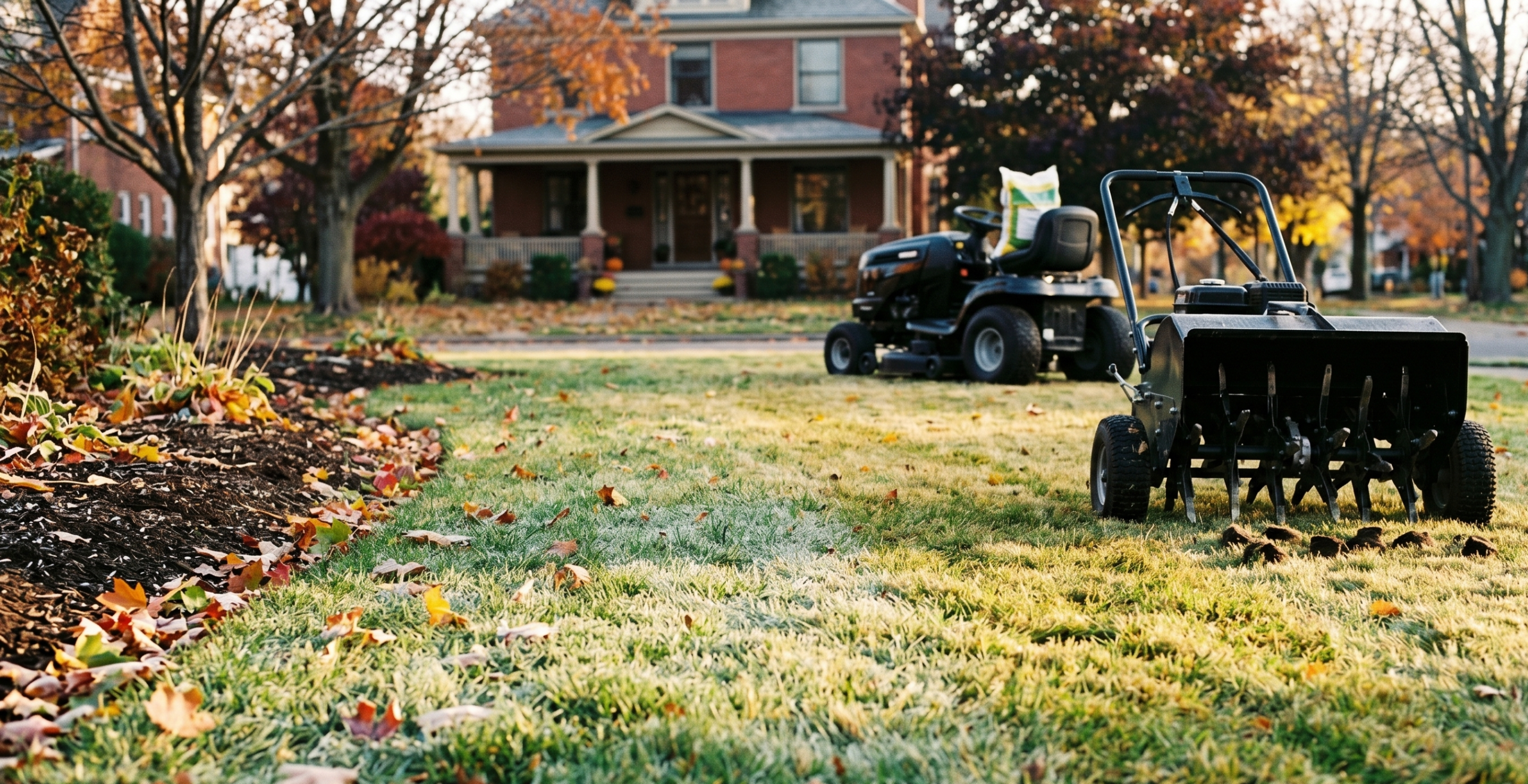
If you love a lush, thick, deep-green backyard, you probably chose buffalo grass for its incredible durability and soft feel underfoot. But as the temperature drops in Western New York and frost warnings start appearing on your local weather app, that beautiful turf faces its biggest challenge of the year. Preparing your Buffalo lawn for harsh winters isn’t just about keeping it looking tidy—it is a critical protective process that shields the grass’s unique root architecture from severe frost damage, winter dormancy shock, and spring weed invasions. Taking a few proactive steps mid-to-late autumn ensures your turf doesn’t just survive the freezing temperatures but bounces back vibrant, dense, and healthy the moment spring arrives.
1. Understanding the Winter Threat to Buffalo Turf
Why Buffalo Grass Reacts Differently to Cold
To effectively protect your lawn, we need to understand how buffalo grass (Stenotaphrum secundatum) behaves biologically. Unlike cool-season grasses (like fescue or ryegrass) that thrive in chilly weather, buffalo grass is a warm-season grass. It loves the sun and active growing conditions.
When soil temperatures drop consistently below 14°C (57°F), buffalo grass slows down its chlorophyll production and enters a state of semi-dormancy or full dormancy. This is a natural defence mechanism. The grass shifts its energy focus away from upward leaf growth and moves its nutrient reserves deep down into its root system to survive.
Because buffalo grass spreads primarily via stolons—above-ground runners that creep across the soil surface—its growth mechanism is highly exposed to the elements. If you leave these runners bare, brittle, and unprotected during a harsh freeze, the cellular structure of the grass can rupture. This leads to winter kill, patchy spring growth, and dead zones that take months to repair.
Frequently Asked Question
Q: Will buffalo grass lose its green color completely during a harsh winter?
A: It is completely normal for buffalo grass to lose some of its vibrant green color and take on a slightly yellow or purplish hue during a cold winter. This occurs because the grass enters a semi-dormant state to protect itself, slowing down photosynthesis. Raising your mowing height in autumn helps preserve as much color as possible by giving the plant more surface area to catch limited winter sunlight.
2. Soil Aeration and Core Conditioning
A resilient winter lawn is built from the roots up. Before the first hard frost hits your region, you need to address soil compaction. Over the summer, heavy foot traffic, backyard BBQs, and mowing compress the soil particles, squeezing out oxygen and preventing water from draining efficiently.
If you head into winter with compacted soil, cold water will sit right at the base of your grass thatch. Freezing water expands, and standing ice around the stolons will rot or freeze-kill the turf crown.
How to Aerate for Winter Success:
- Use a core aerator: Avoid solid spike aerators, which simply push soil sideways and increase compaction. Instead, use a hollow-tine core aerator that physically removes plugs of soil (about 2–3 inches deep) from the ground. or hire professional core aeration services in Buffalo to ensure the job is done with commercial-grade equipment
- The Nutrient Subsurface Channel: This process creates open channels in the earth. It allows oxygen to reach the root zone, ensures autumn rain penetrates deeply rather than pooling, and creates the perfect pathways for your late-season fertilisation inputs to reach the core engine of the plant.
Frequently Asked Question
Q: When is the absolute latest I can aerate my buffalograss lawn before winter?
A: You should aim to core-aerate your lawn in mid-autumn, ideally 4 to 6 weeks before your region experiences its first anticipated hard frost. This timing gives the turf roots just enough active growing time to recover from the physical disruption before soil temperatures drop below the 14°C threshold.
3. The Autumn Nutrition Strategy
Many homeowners make the mistake of buying a generic, high-nitrogen “lawn booster” in late autumn, thinking a burst of green growth will protect the lawn. This is exactly what you shouldn’t do. High nitrogen forces rapid, soft, watery leaf growth. When a hard freeze hits that tender new growth, it turns to mush instantly, leaving the plant highly susceptible to fungal diseases like winter Fusarium or winter patch.
Your intent in autumn should be fortification, not growth. You want to look for a specialised autumn/winter tracker fertiliser characterised by a low nitrogen (N) and high potassium (K) ratio.
[Low Nitrogen] –> Prevents tender, frost-vulnerable leaf flush
[High Potassium] –> Strengthens cell walls & builds deep cold tolerance
- Potassium (K): Acts like an internal antifreeze for the grass cells. It thickens cell walls, regulates water movement within the plant, and drastically improves overall wear tolerance against frost.
- Iron and Magnesium: Opt for a blend with added trace elements like iron. This maintains a healthy, deeper color throughout the cooler months without triggering the structural vulnerability of a nitrogen-driven growth spurt. For the best results, scheduling local seasonal fertilisation treatments ensures your soil gets the exact nutrient ratios it needs.”
Frequently Asked Question
Q: Should I fertilise my buffalo lawn mid-winter if it looks yellow or patchy?
A: No, do not apply fertiliser in the middle of winter. Because the grass is dormant or semi-dormant, its roots cannot efficiently absorb or process nutrients. Any nitrogen applied during this time will either leach out into local waterways or sit on the soil, feeding winter weeds and increasing the risk of fungal diseases. Stick strictly to an early-to-mid-autumn application schedule.
4. Mowing Height Adjustments
As a professional turf care practice, adjusting your mower height as winter approaches is one of the easiest, zero-cost ways to shield your Buffalo lawn.
During the peak of summer, you might keep your Buffalo cut to a crisp 25–35 mm. However, for the final two or three mows of autumn, you should raise your mower blades by 10–15mm, aiming for a finished height of around 45–50mm.
A taller leaf blade means more surface area to absorb whatever limited sunlight is available during short winter days. This allows the plant to continue photosynthesis at a minimal level, storing critical carbohydrates. Furthermore, a thicker canopy acts as a natural insulating blanket over the delicate surface stolons and the soil bed, buffering them against direct frost contact.
Always ensure your mower blades are incredibly sharp. Dull blades tear the grass rather than cutting it cleanly, leaving jagged edges that take longer to heal and present an open doorway for airborne fungal spores during damp, cold months.
Frequently Asked Question
Q: Do I need to mow my buffalograss lawn at all during the winter months?
A: Mowing is rarely required during mid-winter because the grass growth slows down to an absolute crawl. If you experience a mild winter spell and notice the grass height looks uneven, you can perform a clean-up mow. However, keep the blades at their maximum raised winter setting and ensure you never remove more than one-third of the leaf blade at any single time.
5. Weed Management and Pre-Emergent Protection
When buffalo grass goes dormant in winter, it stops growing aggressively. This means it stops competing for space. Weed seeds look at a dormant lawn as an open real estate market. Winter weeds like winter grass (Poa annua), bindi, and broadleaf weeds will happily germinate in the cold, stealing space and nutrients. By the time spring rolls around, your lawn will be locked in a losing battle against established weeds.
To prevent this without exhausting your budget on selective post-emergent herbicides later, utilizing specialized pre-emergent weed control programs in mid-autumn will stop invasive species before they take root
Pre-emergents work by creating a chemical barrier just below the soil surface that stops weed seeds from successfully sending out shoots once they crack open. Ensure the product you select is explicitly rated safe for Buffalo lawns, as certain chemicals can severely stunt or damage Stenotaphrum secundatum roots.
Frequently Asked Question
Q: Can I apply regular, multi-purpose weed killer to my Buffalo lawn if winter weeds appear?
A: You must be incredibly cautious. Buffalo grass is highly sensitive to many common selective post-emergent herbicides, especially those containing dicamba or bromoxynil, which can severely stunt or kill the lawn. Always read the label explicitly for “Safe for Buffalo/Sir Walter” before applying any chemical to your turf profile.
6. Microclimate Care & Regional Variations
Depending on where your property sits geographically, your winter preparation timeline will shift. Grass care isn’t one-size-fits-all; it depends heavily on your local climate zone.
| Region Type | Frost Risk | Key Prep Window | Winter Water Strategy |
| Inland / Alpine Regions | High / Frequent Hard Frosts | Early to Mid-Autumn | Minimal. Only water if extended dry freeze occurs. |
| Coastal / Temperate Regions | Low / Occasional Light Frosts | Late Autumn | Monitor for rainfall. Supplement if dry to prevent dehydration. |
If you are managing a property in an area known for heavy, regular morning frosts, a brilliant trick is to give your lawn a very light, brief morning rinse before the sun directly hits the grass blades. This melts the frost ice crystals slowly and gently off the leaf surface, preventing a phenomenon known as “frost burn”, where the sun quickly heats the ice crystals and scorches the leaf cells beneath them.
Frequently Asked Question
Q: How often should I manually water my Buffalo lawn over the winter?
A: Reduce your watering schedule significantly—usually just once every 2 to 3 weeks is sufficient if there is no natural rainfall. The goal is simply to keep the deeper soil profile from completely drying out, which leaves roots vulnerable to deep freeze damage. Always water in the early morning hours so the grass blades dry fully before freezing nighttime temperatures arrive.
7. Looking for Professional Winter Turf Assistance Near Me?
While managing your autumn lawn treatments on your own can be incredibly rewarding, getting the timing and chemical ratios exactly right for our harsh Western New York winters can be tricky. If you are searching for expert Buffalo lawn care specialists near me, our local team is out on the roads daily helping properties throughout Erie County protect their outdoor investments. Contact us today to get a free lawn care quote before the first freeze hits
Because local microclimates vary—even from the lakefront down to the Southtowns—our turf management programmes are completely tailored to our immediate regional soil conditions and seasonal frost histories.
Our Buffalo Service Footprint
We provide premium core aeration, tailored autumn high-potassium fertilisation, and safe pre-emergent weed barriers across our main service hubs and surrounding areas:
- Our Main Headquarters: Buffalo, NY
- Northern Suburbs & Districts: Williamsville, Amherst, and Tonawanda
- Eastern Service Zones: Cheektowaga, Lancaster, and Depew
- Western & Southern Regions: West Seneca, Orchard Park, and the historic Elmwood Village
Whether you are located down the road from Delaware Park, near the historic Darwin Martin House Complex, or right off Main Street and Hertel Avenue, our trucks are equipped to deliver specialised treatments straight to your doorstep.
Find Our Service Vehicles in Your Neighbourhood: Check our service map below to see our active service radius, read real neighborhood reviews on our Google Business Profile, or get quick directions to our local office.
Frequently Asked Question
Q: How do I know if your lawn care services cover my specific neighborhood?
A: We service a wide radius around the greater Buffalo area. If you are looking for top-rated turf care near me in places like Eggertsville, Kenmore, or East Aurora, simply look at our embedded map above or give our office a call. If your property falls within our highlighted digital service boundary, our team can be out to quote your lawn within 48 hours.
8. Final Winter Checklist for Homeowners
To keep your winter lawn preparation completely organised, follow this chronological step-by-step checklist as the seasons transition:
To effectively prepare your lawn, start in mid-autumn by de-thatching and cleaning the surface, raking away heavy leaf drops, organic debris, and excess thatch buildup so that critical light and air can easily reach the soil profile. Next, perform a core aeration during this same mid-autumn window to relieve subsurface soil compaction, maximising drainage and root oxygenation before seasonal rains set in. As you transition into late autumn, apply an autumn fertiliser and pre-emergent treatment by spreading a high-potassium winteriser alongside a buffalo-safe pre-emergent weed barrier, making sure to water them in thoroughly. Finally, in the late autumn just before the first frost, raise your mower blades to perform your final seasonal mows at an elevated height of 45–50mm, which establishes a thick, protective, and insulating winter canopy.
If your lawn is covered in a heavy morning frost, stay off it entirely. Walking on frozen grass snaps the brittle leaf blades and ruptures the frozen plant cells, leaving ugly brown footprints that won’t heal until spring.
By investing a small amount of time into your Buffalo lawn during the autumn transition, you protect your financial and physical investment in your landscaping. Instead of spending your spring spending money on weed killers, patch repair kits, and heavy fertilisers to bring a dead lawn back to life, you’ll simply watch your protected, healthy Buffalo turf wake up naturally—thick, green, and completely ready for summer fun.
Frequently Asked Question
Q: What should I do first if spring arrives and my Buffalo lawn has dead patches?
A: Do not panic or immediately flood it with heavy nitrogen. Wait until soil temperatures consistently climb back past 15°C (59°F) and the grass starts showing natural green shoots. Gently rake away any dead matter, check the soil moisture levels, and apply a balanced, slow-release spring fertiliser to kickstart healthy, controlled lateral growth.
Be The First To Comment